 Travellingvisio.com
Haarlem: 16 Sights, Canals & a Castle
 Netherlands
- The Spaarne Canal and Haarlem's Waterfront
- De Adriaan Windmill
- Historic Streets and Houses in the Centre
- Amsterdamse Poort
- Grote Kerk on Grote Markt
- Grote Markt and the Historic Town Hall Buildings
- Haarlem Cheese Market
- Corrie ten Boom House
- Cathedral Basilica of St Bavo
- Elswout Park and Gardens
- Landgoed Duinlust
- Schoterveense molen
- Practical Information for Visiting Haarlem
- Museums to Visit in Haarlem
- Things to Do in Haarlem
What to see in Haarlem? Explore the Spaarne canal, Grote Markt with St. Bavo's Church, De Adriaan windmill and quiet Elswout park. Netherlands day trip tips.
 New: Follow me on WhatsApp channel 🤟
When you think of the Netherlands, Amsterdam probably comes to mind. I happened to hear about Haarlem, a city right next to Amsterdam, from an acquaintance. I thought that since I was already in Amsterdam, I might as well take a look. So I hopped on a train and headed there.
Honestly, I might like this city even more than Amsterdam itself. Very few people, both in the morning and during the day, markets, clean streets, and nature and tranquillity everywhere. If you have some extra time, I definitely recommend visiting Haarlem.
Haarlem is a historic city in the Netherlands that brings together canals, brick houses, Gothic churches, museums and peaceful green spaces beyond the centre. Most of the main sights are within walking distance of Grote Markt square, making Haarlem well suited to a day trip from Amsterdam or a more leisurely city weekend.
The Spaarne Canal and Haarlem's Waterfront
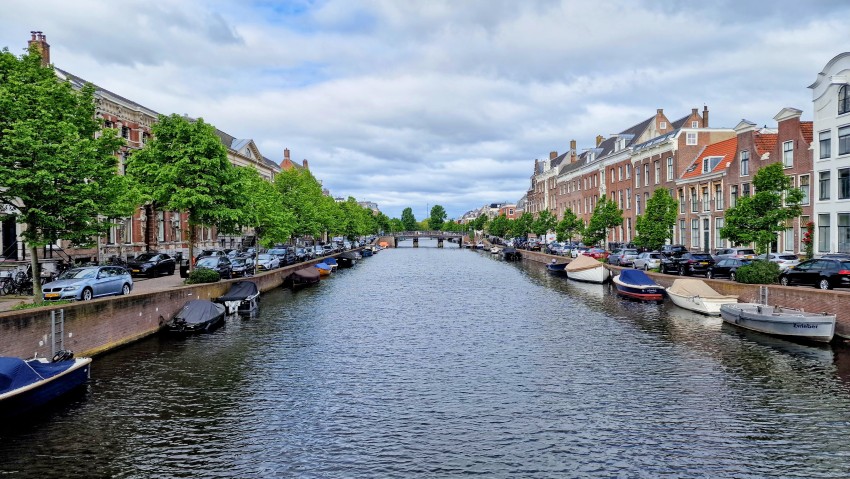
The Spaarne is Haarlem's main canal, running through the city and providing one of the best settings for a first introduction to Haarlem. From the bridges and waterfront, you can see rows of historic houses, moored boats and everyday city life along the water. The contrast between the water, narrow façades and wide-open sky gives Haarlem its typically Dutch character.
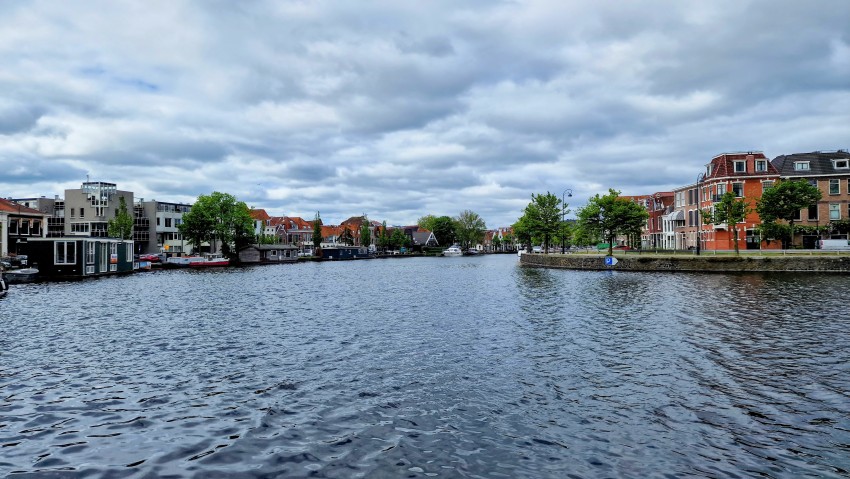
The canal is more than just a backdrop for tourists; it is an important axis through the city. Houses from different periods line the water, from traditional narrow brick buildings to later urban developments. A walk along the waterfront is easy to combine with a visit to the centre, De Adriaan windmill or one of Haarlem's museums.
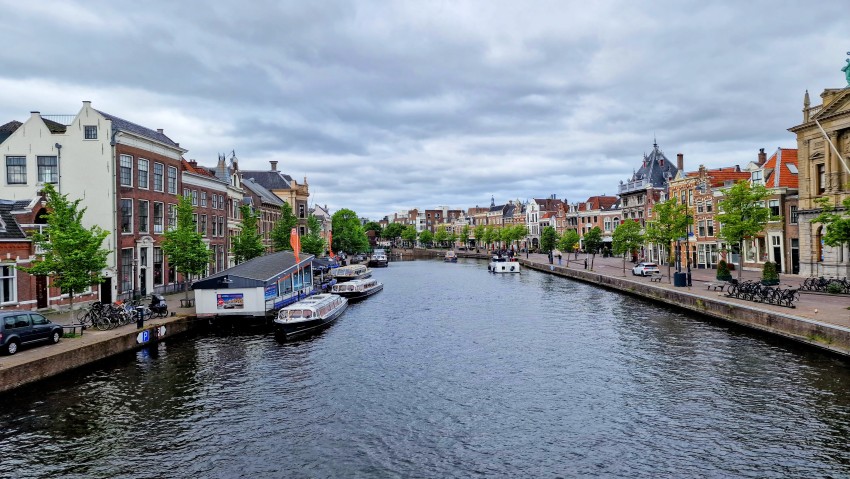
Small houseboats, sightseeing boats and regular water traffic share the water, while trees and historic houses line the streets on either side. If you want to explore Haarlem without rushing, the Spaarne is a useful point of reference: from the surrounding area, you can quickly reach Grote Markt, the neighbourhood around Bakenessergracht and the parks to the south.
De Adriaan Windmill
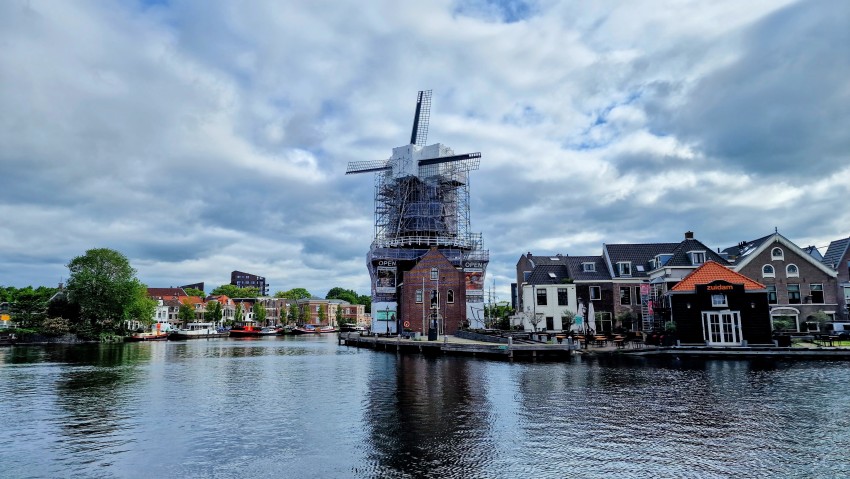
De Adriaan is a well-known windmill on the banks of the Spaarne and one of Haarlem's most distinctive landmarks. It stands by the water near the historic centre, so its silhouette stands out from both the waterfront and passing boats. The photograph shows the windmill in its urban setting between the water and the houses, illustrating how naturally Haarlem's industrial heritage blends with its residential buildings.
The only windmill along the route around the historic centre, and they were renovating it right then. Just my luck when it comes to taking photos 😅.
Historic Streets and Houses in the Centre
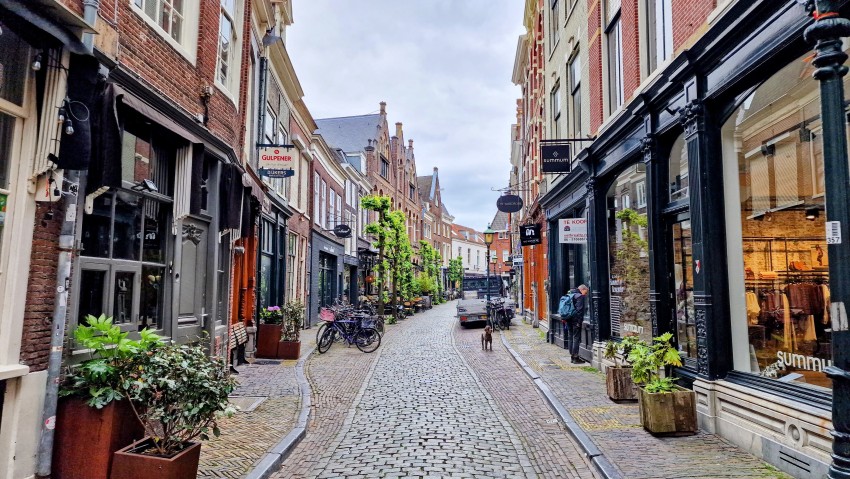
Haarlem's centre is best explored on foot, as continuous rows of narrow brick houses have survived along its side streets.
For example, the photo above is from my walk from the square, where I started by the church on Warmoesstraat, walked to Schagchelstraat, shown in the photo below, and continued to Groot Heiligland, which is in the photo below. All these streets connect to one another. A really lovely walk, especially if you go early in the morning. There are very few people, and it is quiet and peaceful.
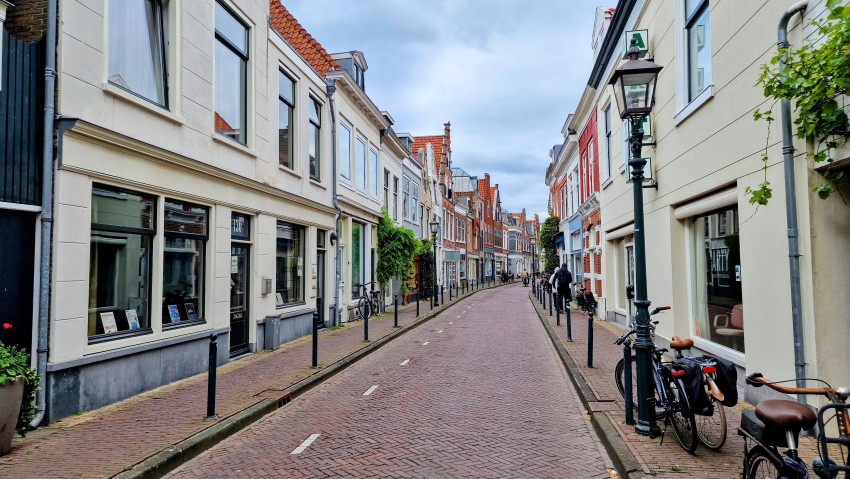
The next street shows a typical mix of old buildings and contemporary city life. The houses have different gables, colours and window sizes, yet together they form a coherent whole. As you walk, it is worth paying particular attention to the details of the decorative brickwork, doors, shop signs and narrow passageways between the main streets.
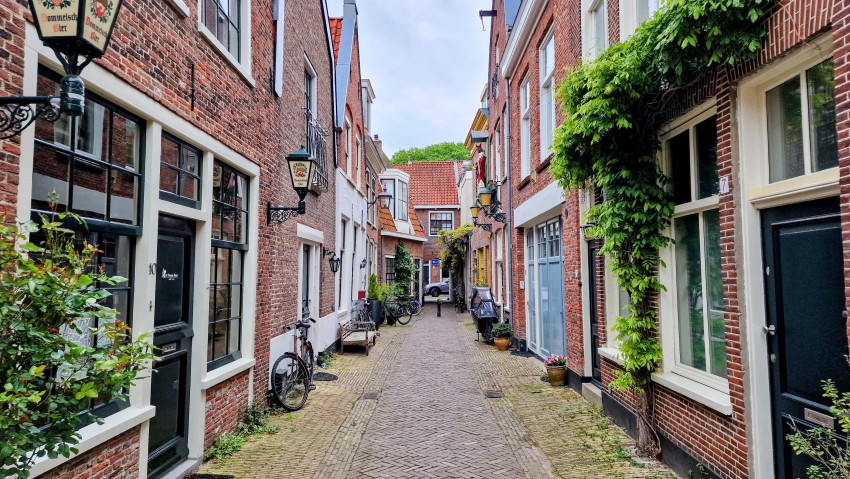
Above is a photo of Nieuw Heiligland, which connects to Groot Heiligland, shown in the photo below.
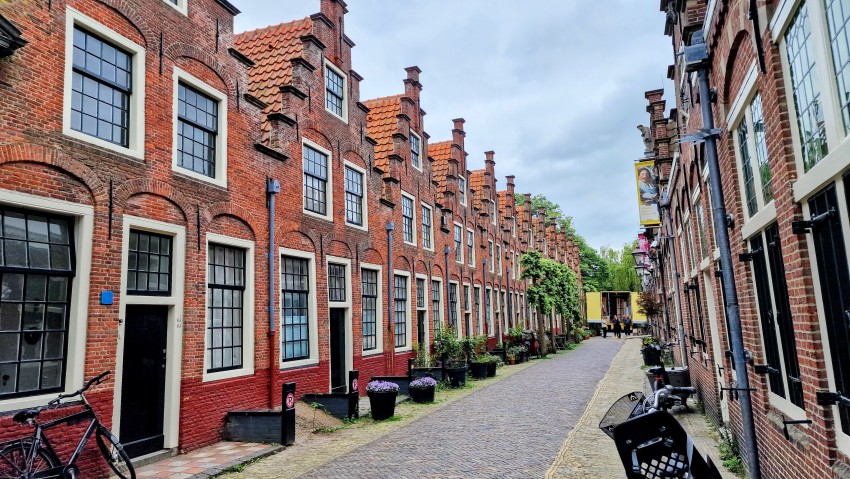
I definitely recommend exploring the smaller, narrower side streets. The houses stand close together, the pavements are narrow, and bicycles, flowers and small decorations often fill the space. Some of the houses are even crooked.
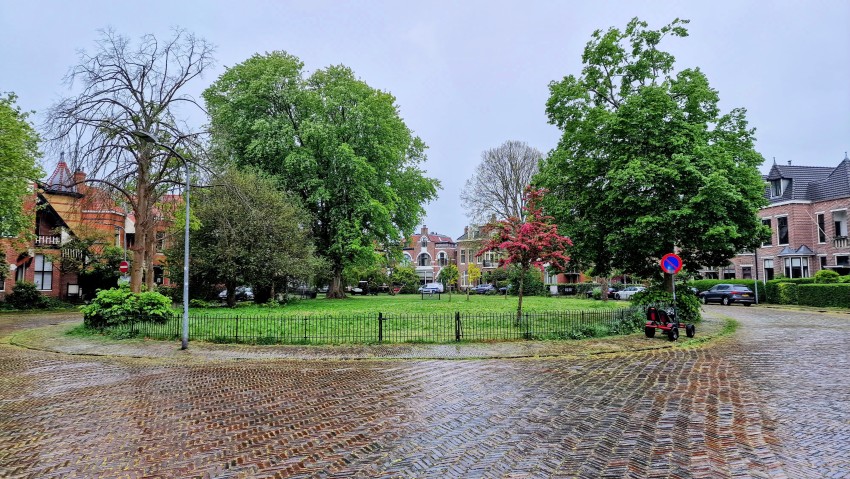
And Haarlem has plenty of these lovely little streets. Just when I thought I had walked along them all, I came across Wilhelminapark. Exploring Haarlem on foot is simply a must.
Amsterdamse Poort
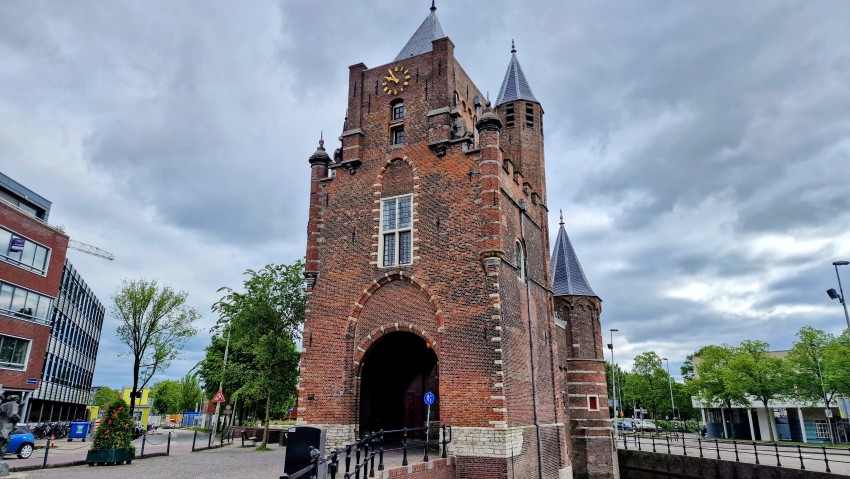
Amsterdamse Poort is a historic city gate on the eastern edge of old Haarlem and a reminder of its former fortifications. The brick structure has a prominent passageway, corner towers and steep roofs that are clearly visible from the nearby square. The gate stands on the route between the centre and the eastern parts of the city and is one of the most interesting surviving buildings away from the main square, Grote Markt.
Grote Kerk on Grote Markt
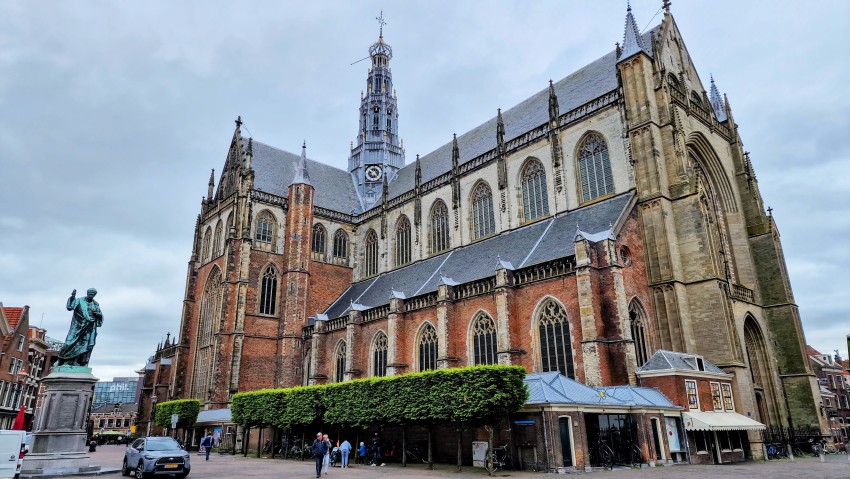
Grote Kerk, also known as St Bavo's Church, is Haarlem's main landmark and stands right on Grote Markt. The large Gothic brick building has tall buttresses, large pointed-arch windows and a clock tower visible from many streets in the centre. The square around the church is a natural starting point for exploring the city.
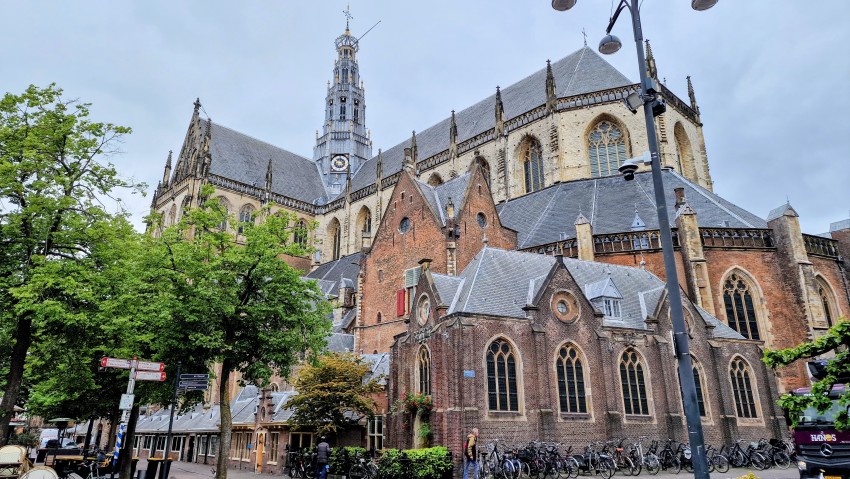
The overall view from the square reveals the scale of the church and its relationship to the surrounding buildings. The façades of cafés and historic houses create a compact urban space, while the church towers prominently above them. When visiting Haarlem, it is worth walking around several sides of the building, as each corner reveals different aspects of its Gothic architecture.
Grote Markt and the Historic Town Hall Buildings
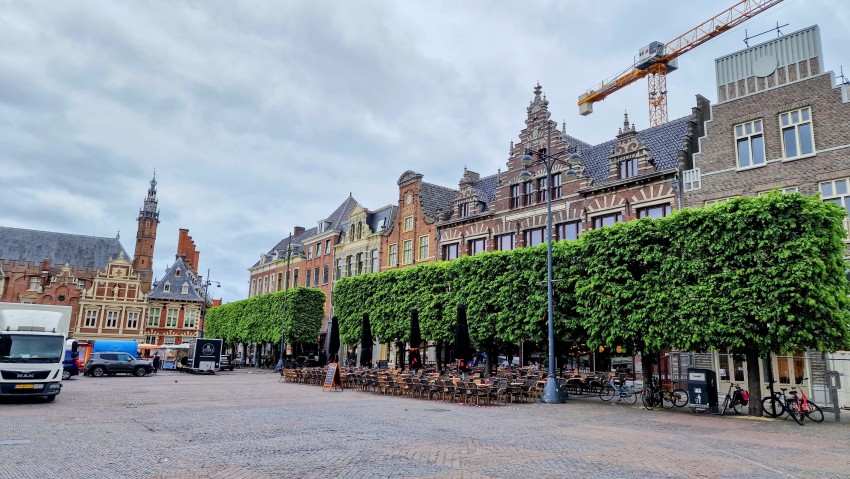
Grote Markt is Haarlem's main square, bringing together the city's most important buildings, restaurants and walking routes. Beside the church, the photograph shows a distinctive historic façade with an elaborately layered gable and surrounding buildings in various shades of brick. The square is a useful place to get your bearings or take a short break between visits to the church, museums and shopping streets.
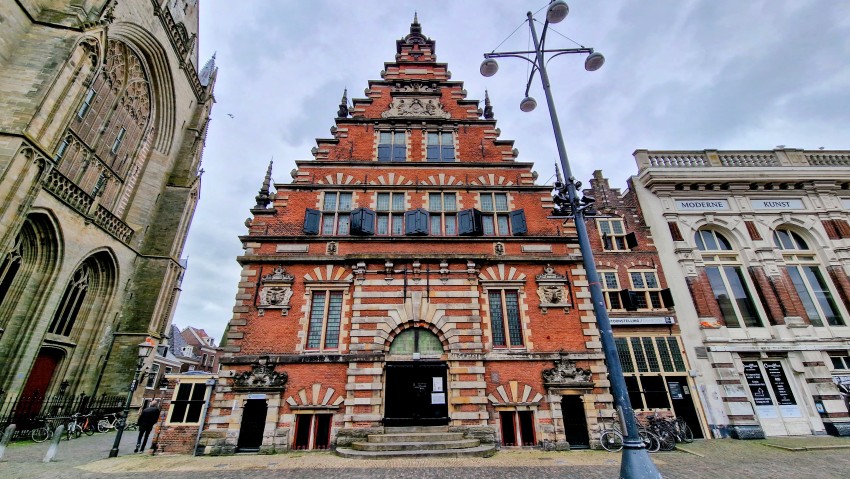
The Vleeshal is a striking historic building on Grote Markt whose ornate brick façade contrasts with the church's monumental frontage. It is one of the most photographed buildings in the centre, and the surrounding area clearly showcases the typically Dutch use of ornamentation, stepped gables and coloured stone details.
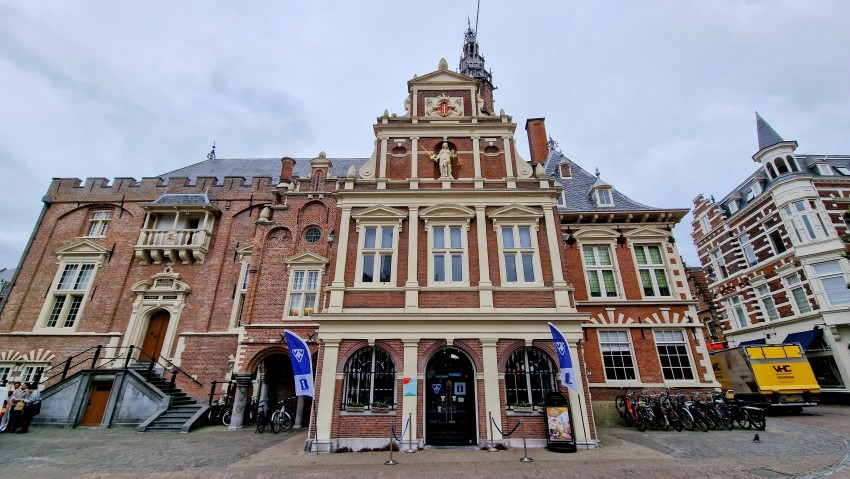
The historic town hall and surrounding houses add grand civic architecture to the scene on Grote Markt. The photograph shows an ornamental façade with a coat of arms and a clock feature, contrasting with the simpler neighbouring buildings. A walk around the square thus brings you into contact with Haarlem's religious, administrative and commercial history within just a few minutes.
Haarlem Cheese Market
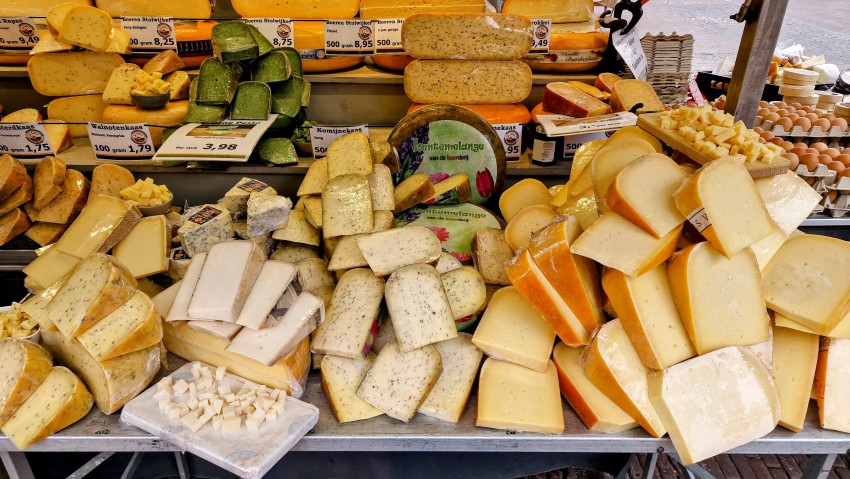
The cheese stall is a reminder that Dutch cuisine is built in part on a wide selection of local and regional cheeses. The photograph shows dozens of varieties in different sizes, colours and styles, from young, pale cheeses to more mature orange varieties. Tasting or buying cheese is a simple way to take home an edible souvenir of your visit to Haarlem.
Corrie ten Boom House
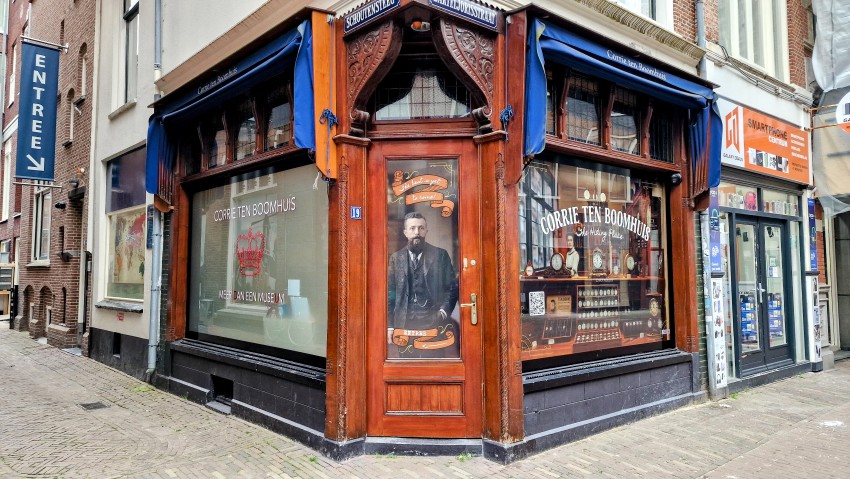
The Corrie ten Boom House in the heart of Haarlem holds one of the most significant stories of courage from the Second World War. In this former watchmaker's shop, the ten Boom family risked their lives by building a secret hiding place behind a false wall for Jews and members of the resistance. Although some family members did not survive the hardships of the war, Corrie continued to share this story of hope and transformed the family home into a living museum in 1988. A visit takes you straight back to the 1940s, allowing you to see the original rooms and the famous hiding place for yourself.
Cathedral Basilica of St Bavo
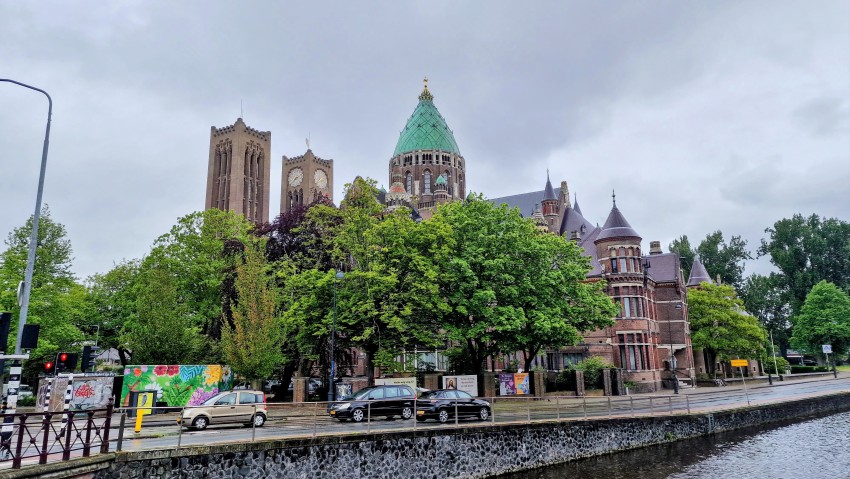
The Cathedral Basilica of St Bavo is a large Gothic Revival church on the southern edge of Haarlem, distinct from the Gothic Grote Kerk on Grote Markt. From a distance, its two tall towers and green dome stand out, creating a distinctive silhouette above the trees and surrounding streets.
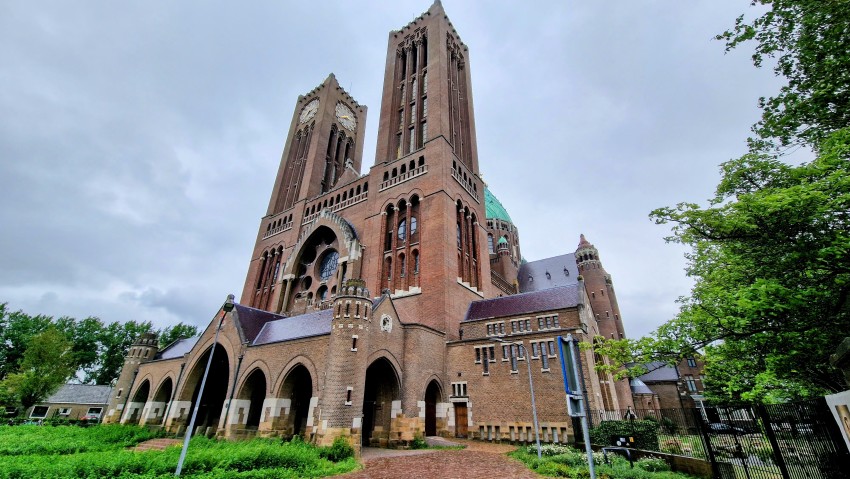
A closer view reveals the imposing brick façade, tall towers and arched entrance. The basilica is interesting not only for its size but also for its contrast with the older St Bavo's Church in the centre: here, the same dedication is expressed through later monumental church architecture. Before visiting, it is worth checking the current access arrangements and any scheduled services.
Elswout Park and Gardens
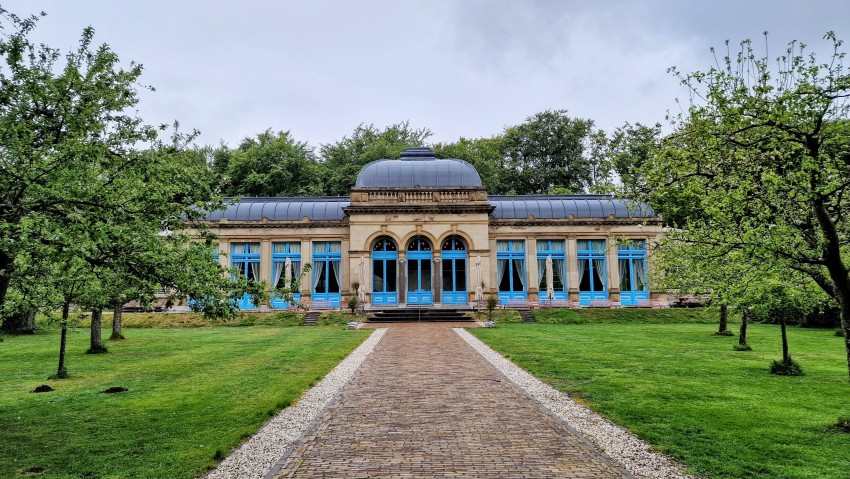
Elswout is a historic park near Haarlem with maintained paths, water features and buildings from the former estate. The grounds offer a quieter walk and show what the landscaped surroundings of country houses near Haarlem once looked like.
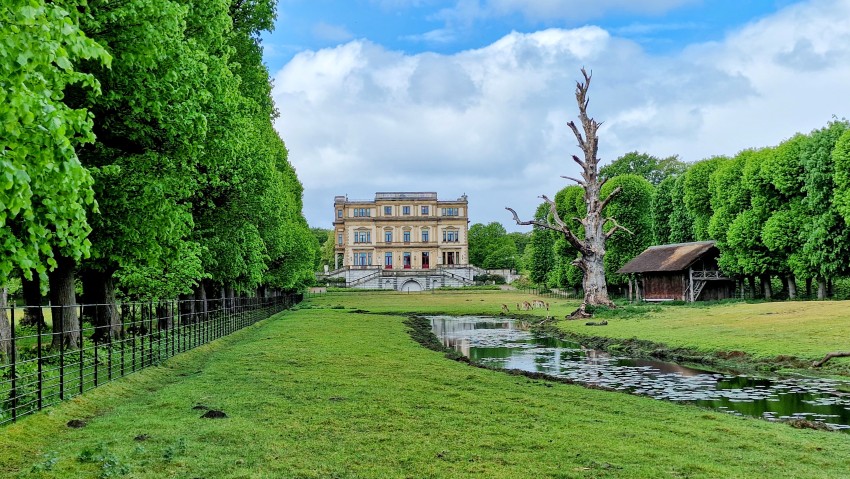
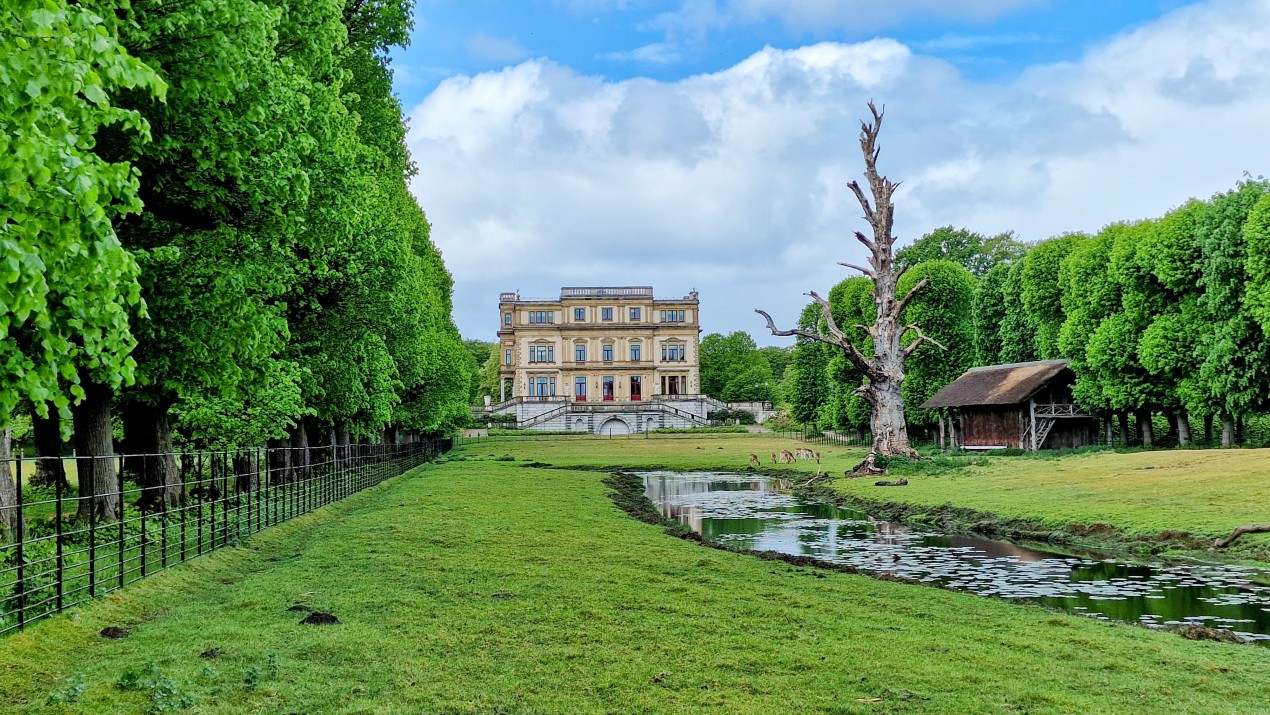
The historic house on the Elswout estate is surrounded by an extensive lawn, canals and old trees. The view across the meadow clearly shows the distance between the main building and the park's paths. Elswout is therefore particularly worth visiting for those who want to complement Haarlem's sights with nature and country-house architecture.
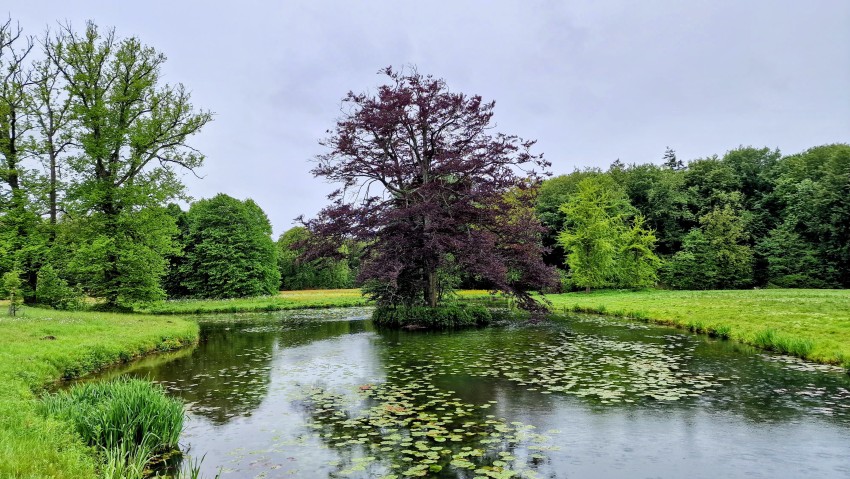
The ponds and small islands in Elswout park create a natural-looking landscape of water lilies, meadows and mature greenery. The paths around the ponds are well suited to a leisurely walk and photography, alternating between open views and wooded stretches. The water also reflects the typically Dutch approach to landscape management.
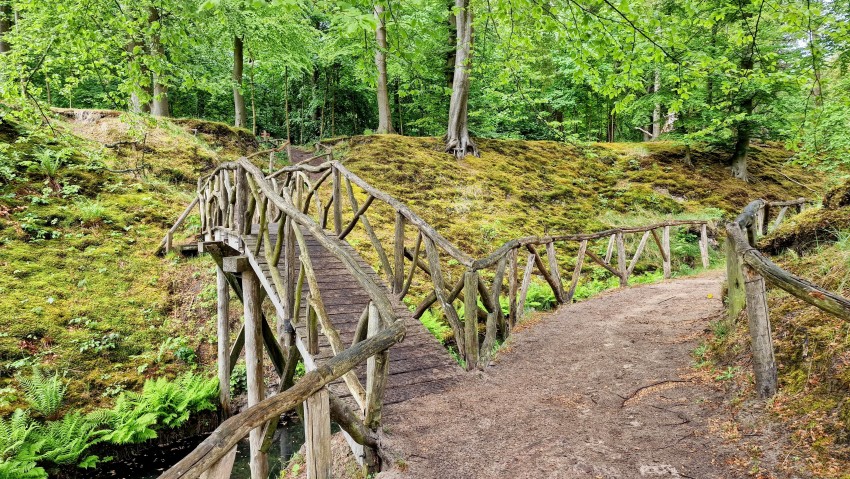
The wooden bridge with its branch-like railings is one of the small details that give Elswout park its distinctive character. A narrow path crosses a shallow ditch among moss, ferns and trees, making a visit feel more like a countryside outing than an ordinary city walk. The bridge is one of the places where it is worth slowing down and noticing the park's landscape design.
In any case, bear in mind that there is only one entrance and one exit here. I thought I could leave through a gate on the other side of the grounds, but it was locked.
Landgoed Duinlust
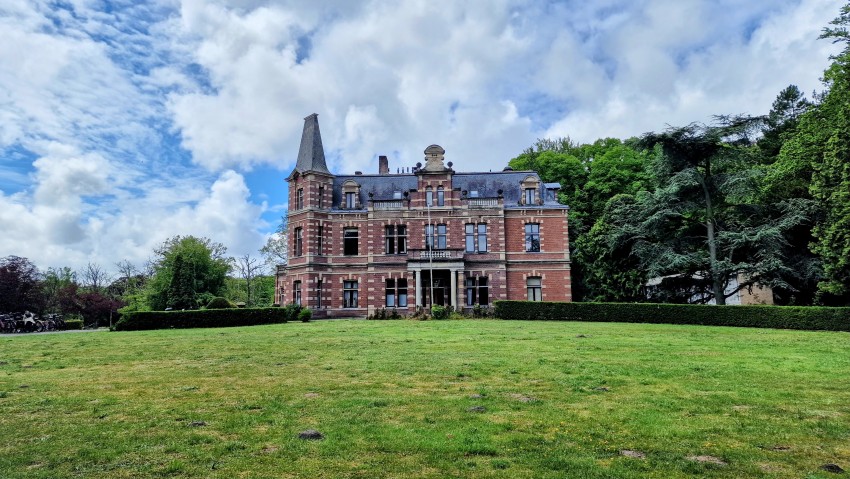
Landgoed Duinlust is a historic country estate on the edge of Zuid-Kennemerland National Park, combining a rich history with the charm of the Dutch countryside. The estate, whose origins date back to the 17th century and whose current Renaissance Revival appearance dates from the late 18th century, served as an aristocratic summer residence.
Currently, in 2026, some kind of photography studio is based here. The building is still worth seeing, at least from the outside.
Schoterveense molen
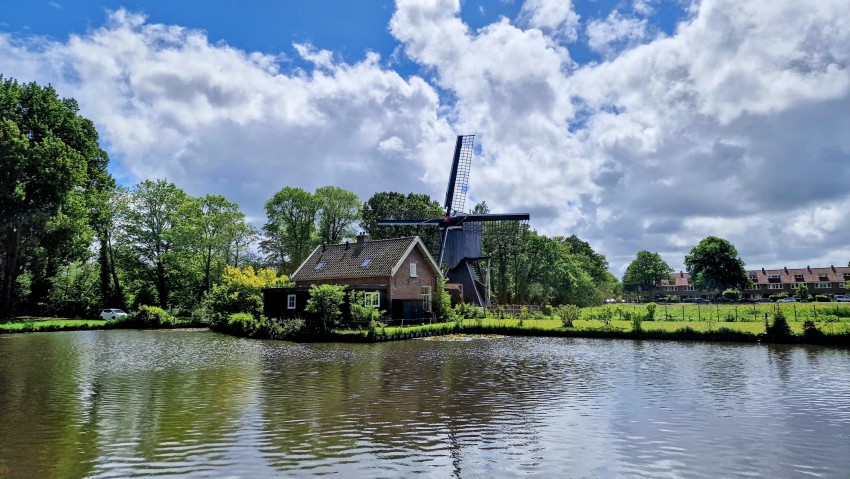
Schoterveense Molen is a picturesque and historically valuable windmill dating from 1634, located in the northern part of Haarlem. This traditional Dutch windmill of the type known as a wipmolen served for centuries to drain the surrounding wetlands and polders, and remains a reminder of Dutch mastery of hydraulic engineering.
The windmill is a little off the usual route around the historic centre. Still, it is worth coming here for a look. Besides the windmill, there is the small Heussensstraat park and a pond.
Practical Information for Visiting Haarlem
- The historic centre, Grote Markt, Grote Kerk, the Spaarne waterfront and Amsterdamse Poort can easily be combined in a walk.
- For a longer outing, combine the centre with Haarlemse Hout park or the Elswout estate on the southern edge of the city.
- Before your trip, check the current opening hours and entry requirements for the specific museums, churches and the Elswout estate.
- Consider whether hiring a bicycle might be a better option if you also plan to explore the area around Haarlem.
Museums to Visit in Haarlem
- Frans Hals Museum – a museum dedicated to Dutch art, particularly Haarlem's painting tradition and the work of Frans Hals.
- Teylers Museum – a historic museum of science, art and natural history in the city centre, making a good addition to a walk along the Spaarne.
Things to Do in Haarlem
- A Cruise on the Spaarne – a way to see the historic houses and waterfront from a different perspective.
- A Walk Around the Hofjes – Haarlem's enclosed courtyards, with their small houses and greenery, are among the city's characteristic quieter spots; check current access arrangements.
- You can find plenty of ideas for trips on GetYourGuide.com.
- Frans Hals Museum: https://www.franshalsmuseum.nl/, Google Maps
- Teylers Museum: https://www.teylersmuseum.nl/, Google Maps
- De Adriaan: https://www.molenadriaan.nl/, Google Maps


