 Travellingvisio.com
Best things to do in Lisbon
 Portugal
- Praça do Comércio (Commerce Square)
- Torre de Belém (Belém Tower)
- Jardim da Torre de Belém (Garden of the Belém Tower)
- Passeio Carlos de Camões
- Castelo de S. Jorge (St. George's Castle)
- Codfish Cake and Port wine at Casa Portuguesa do Pastel de Bacalhau!
- Baixa Chiado
- Padrao dos Descobrimentos
- Arco do Triunfo (Triumphal Arch)
- Miradouro da Graça (Graça Viewpoint)
- Miradouro da Senhora do Monte (Viewpoint of Our Lady of the Mountain)
- Santa Justa Lift (Elevador de Santa Justa)
- Ponte 25 de Abril (25th of April Bridge)
- Almada
- Castle of Almada
- Cruz Alta
- Monsanto
- Ribeira das Naus
- Bairro alto
- Mosteiro dos Jeronimos
- Alfama
- The dark sides of Lisbon
What to visit in Lisbon? Discover the best places in Lisbon: historical landmarks, charming neighborhoods, and tips for unforgettable experiences in the capital of Portugal. Get inspired by my travels!
 New: Follow me on WhatsApp channel 🤟
I only had two days to explore Lisbon, and I started my first day early in the morning after arriving from Málaga.
Although Lisbon didn’t particularly win me over (I don’t want to be unfair to Lisbon, so you’ll find out more at the end of the article), and the city didn’t quite grow on me, I did discover a few lovely spots that are definitely worth visiting, as well as a local specialty that’s worth trying.
Lisbon is full of narrow streets crowded with people, and in the center, you’ll often be walking uphill and downhill. So plan your route well to conserve your energy.
Praça do Comércio (Commerce Square)
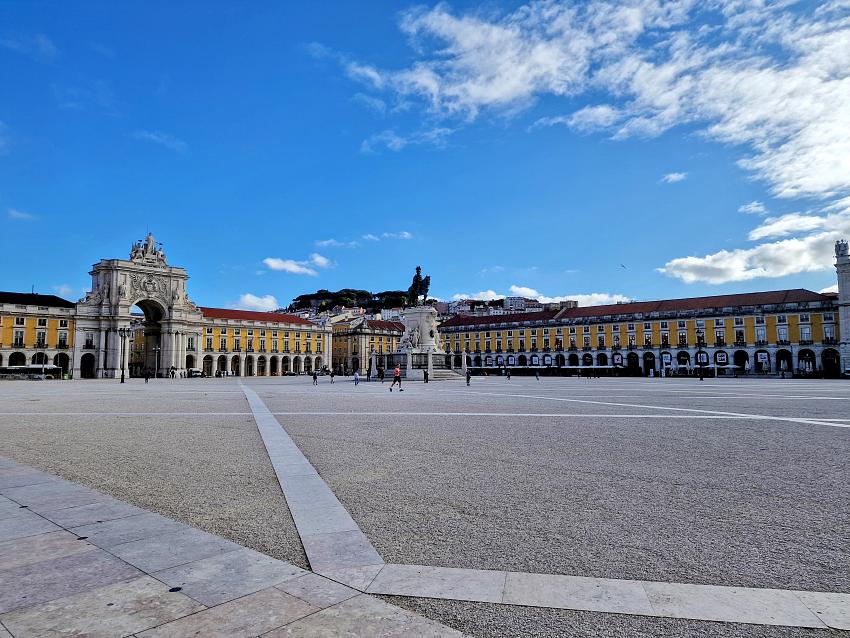
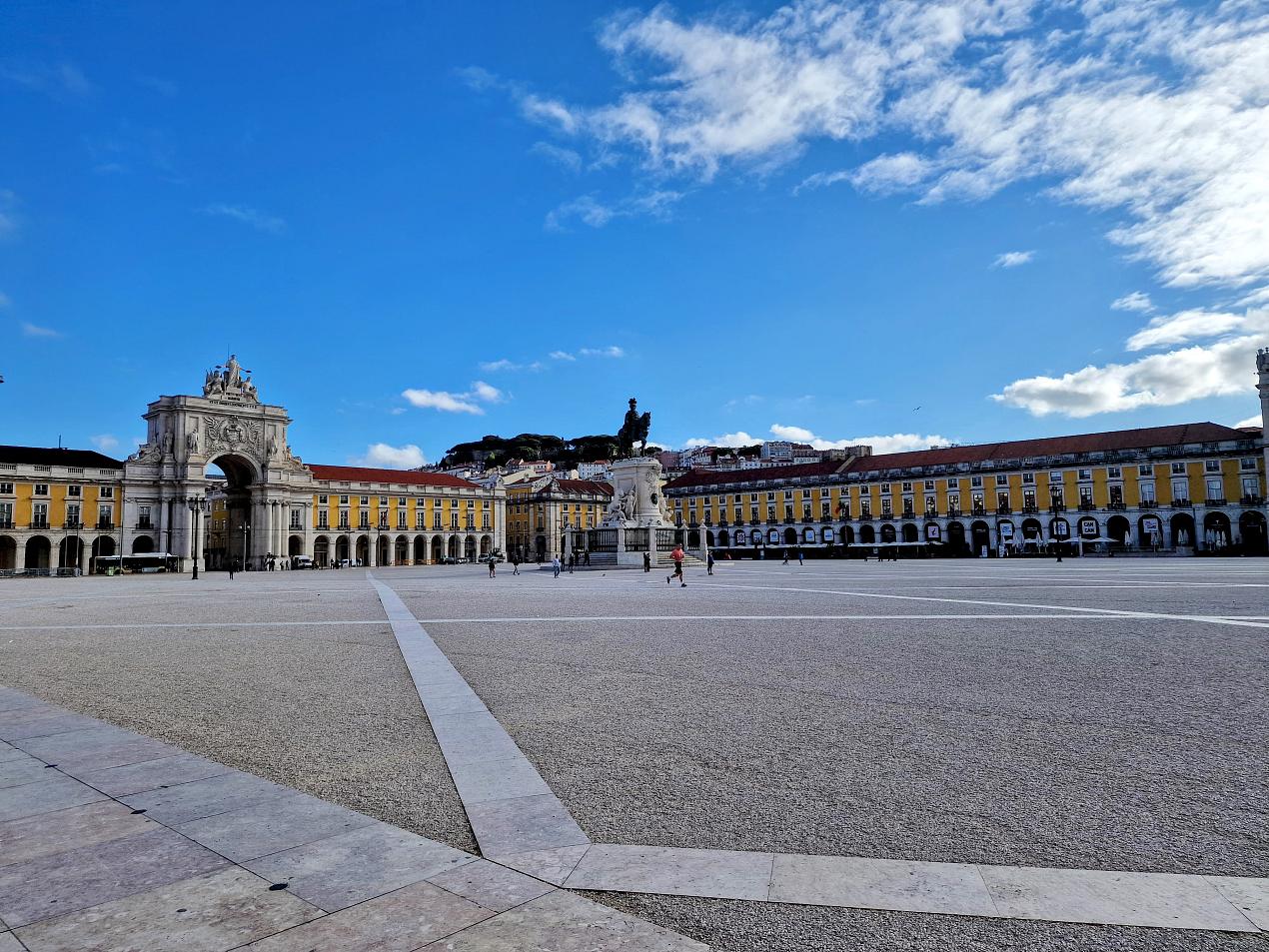
Praça do Comércio, also known as Terreiro do Paço, is one of the most beautiful and famous squares in Lisbon. It is located right by the Tagus River and is surrounded by historic buildings with typical yellow façades. The square's main landmarks are the equestrian statue of King José I and the impressive Arco da Rua Augusta triumphal arch, which leads into the bustling city center. Praça do Comércio is an ideal place to explore Lisbon’s history, sit in a café with a view of the river, and enjoy the atmosphere of this enchanting city.
If you want nice photos, I recommend coming here around 6–7 AM. You’ll hardly run into anyone at that time.
Torre de Belém (Belém Tower)
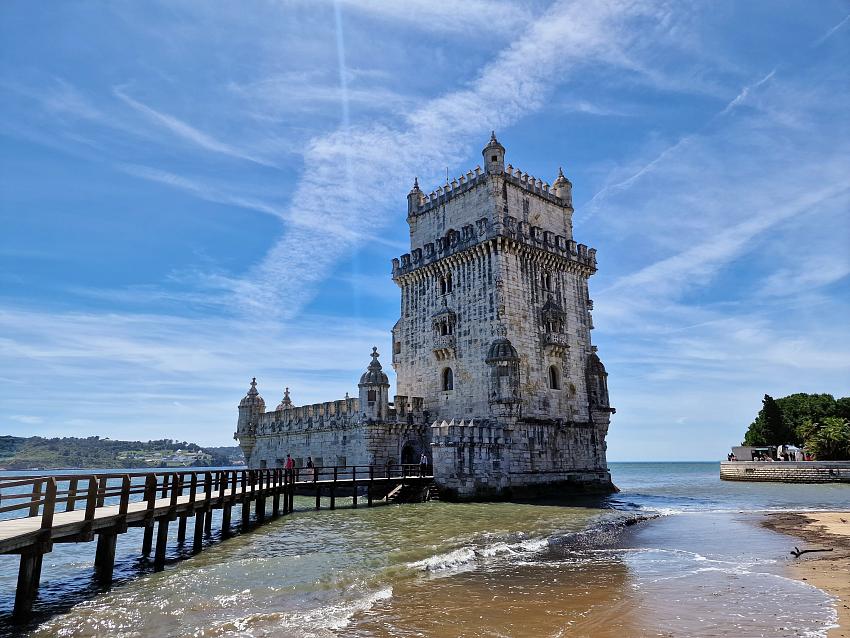
Torre de Belém is an iconic historical landmark of Lisbon and one of the most important symbols of Portugal. This 16th-century tower, built in the Manueline style, is located on the bank of the Tagus River and was originally used to defend the harbor. Torre de Belém is a UNESCO World Heritage Site and offers visitors a fascinating glimpse into the history of sea exploration and the discovery of new worlds. The view from the tower of the surrounding landscape and the river is breathtaking, making it a must-visit spot when exploring Lisbon.
If you plan to visit the tower and want to go inside, I recommend going very early in the morning. Later, the lines get incredibly long, there’s not much shade to hide from the sun, and waiting in line becomes quite unpleasant.
Jardim da Torre de Belém (Garden of the Belém Tower)
Jardim da Torre de Belém is a park located right next to the famous Torre de Belém in Lisbon. This green space offers a peaceful spot to relax with a view of the Tagus River and the historic tower. The garden features well-maintained lawns, trees, and flower beds, creating a pleasant atmosphere for walks or relaxation.
Around the park, there are many stalls offering a wide selection of drinks and snacks. In the hot weather, I treated myself to a drink served in a pineapple – and it was awesome! 🍹
Passeio Carlos de Camões
Passeio Carlos de Camões is a picturesque promenade in Lisbon, located near the Tagus River, not far from the Belém district. This pleasant promenade offers beautiful views of the river and is an ideal spot for walks, relaxation, or sitting on benches surrounded by greenery. In the middle of the promenade stands a statue of the Portuguese national poet, Luís de Camões, after whom the place is named. Passeio Carlos de Camões is a great spot for those who want to escape the hustle and bustle of the city and enjoy a peaceful atmosphere with stunning views of the surrounding landscape.
When I visited this area in May 2024, there was a rich selection of food stalls and a pleasant spot to sit with a view of the river. I definitely recommend taking a walk here if you want to take a break from the urban hustle and enjoy a peaceful atmosphere.
Castelo de S. Jorge (St. George's Castle)
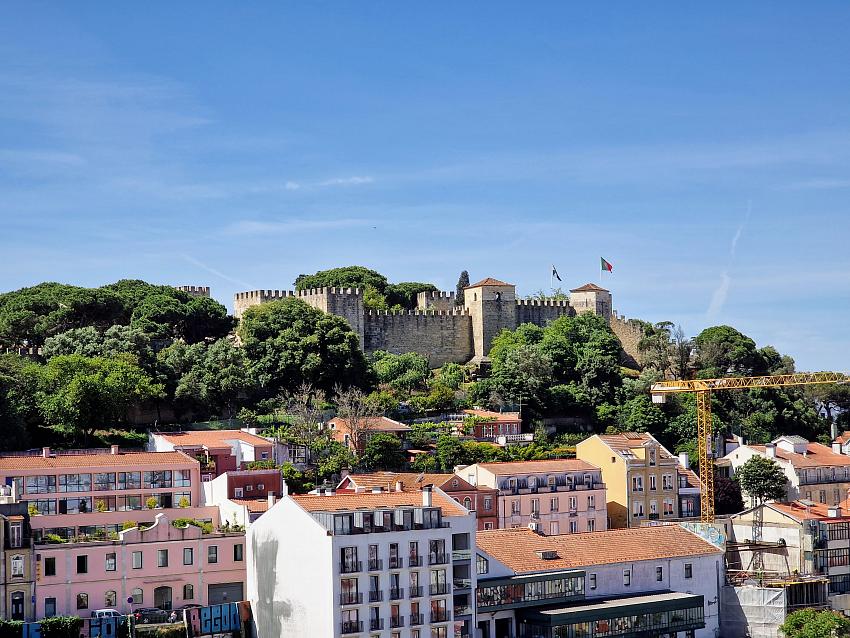
Castelo de São Jorge is one of the main historical attractions in Lisbon, offering stunning views of the entire city and the Tagus River. This majestic castle, with a rich history dating back to the 11th century, served as a royal residence and fortress. It is located at the top of a hill in the Alfama district, where visitors can explore not only the impressive castle walls but also an archaeological site and a museum with a collection of artifacts. Castelo de São Jorge is an ideal place for those who want to experience the atmosphere of old Lisbon and enjoy some of the best panoramic views of the city.
I recommend visiting the castle in the morning. Otherwise, there is a long line from the castle down the road, and the waiting time can be really long. Fortunately, right next to it is a stand offering Codfish Cake and Port wine at Casa Portuguesa do Pastel de Bacalhau!
Codfish Cake and Port wine at Casa Portuguesa do Pastel de Bacalhau!
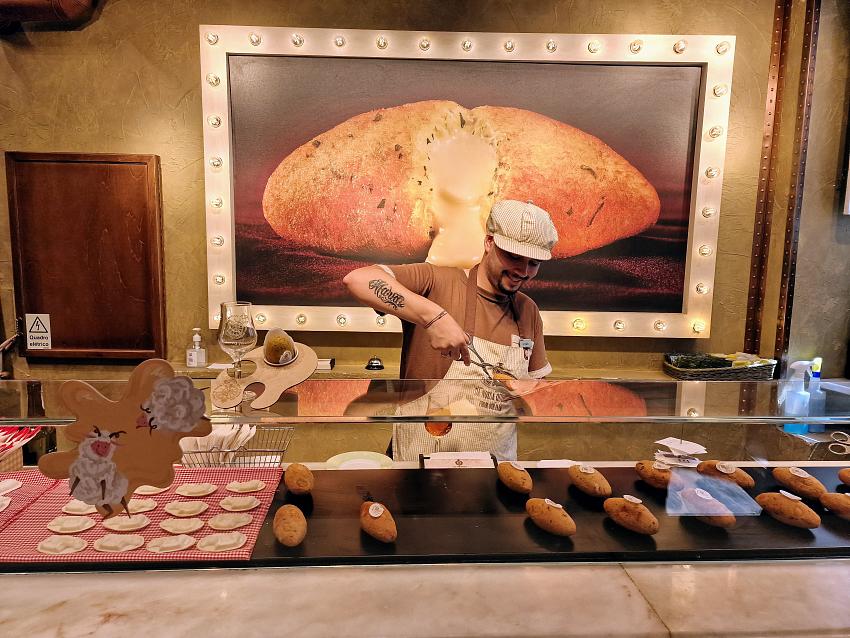
Definitely don't miss this local specialty.
I came across this mini snack near the Castelo de São Jorge castle. It’s located right across from the castle entrance.
They serve this experience in style – you get an elegant coaster with a glass of Port wine and a piece of perfectly crispy fried codfish delicacy.
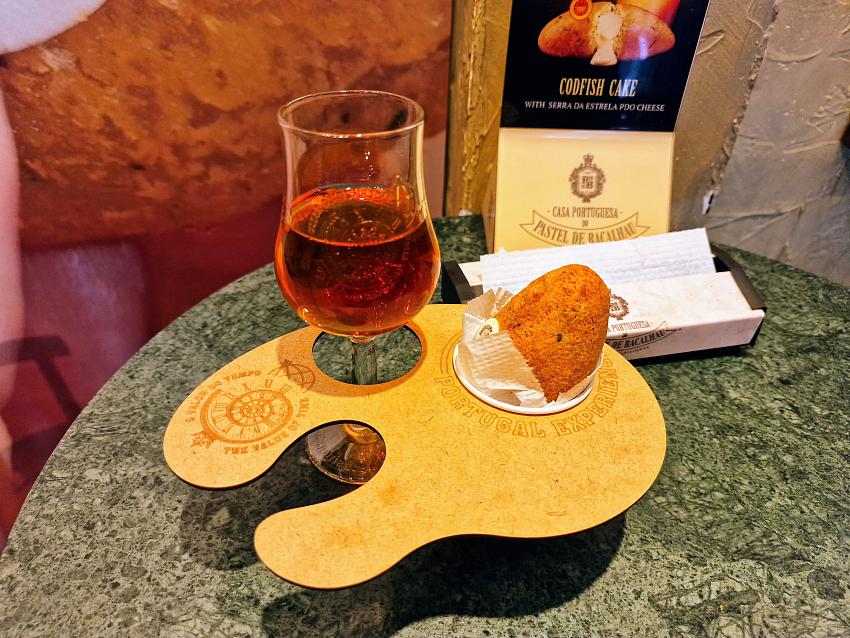
Codfish Cake, known in Portugal as Pastel de Bacalhau, is a traditional Portuguese fried delicacy made from cod (bacalhau), one of the most famous ingredients in Portuguese cuisine. This treat is made from finely chopped cod mixed with potatoes, onions, garlic, parsley, and sometimes eggs, creating a smooth mixture. The mixture is then shaped into small oval or ball shapes and fried until golden.
Baixa Chiado
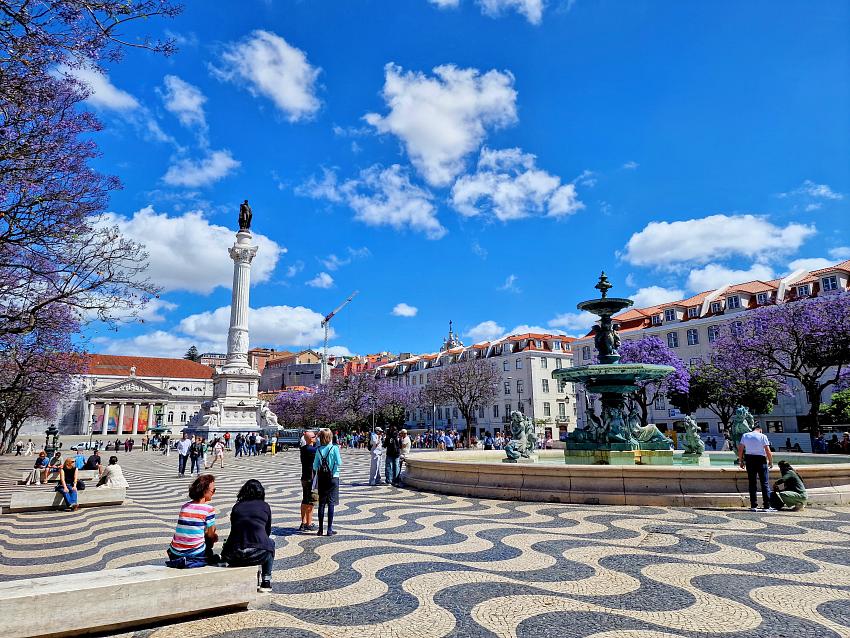
Baixa Chiado is the vibrant heart of Lisbon, where historical elegance blends with a modern atmosphere. This district, located between Praça do Comércio square and the Bairro Alto neighborhood, is known for its wide streets, beautiful architecture, and a diverse selection of shops, cafés, and restaurants. Baixa, built after the 1755 earthquake, is an example of urban mastery with uniform façades and patterned tiles. Alongside iconic places like the Elevador de Santa Justa lift and Rossio square, the Chiado neighborhood is popular for its artistic vibe, bookstores, and cultural centers. Baixa Chiado is the perfect place to explore both Lisbon’s history and modern urban life.
In the morning, you won’t encounter many people on this square. In the afternoon, it’s full of tourists.
Padrao dos Descobrimentos
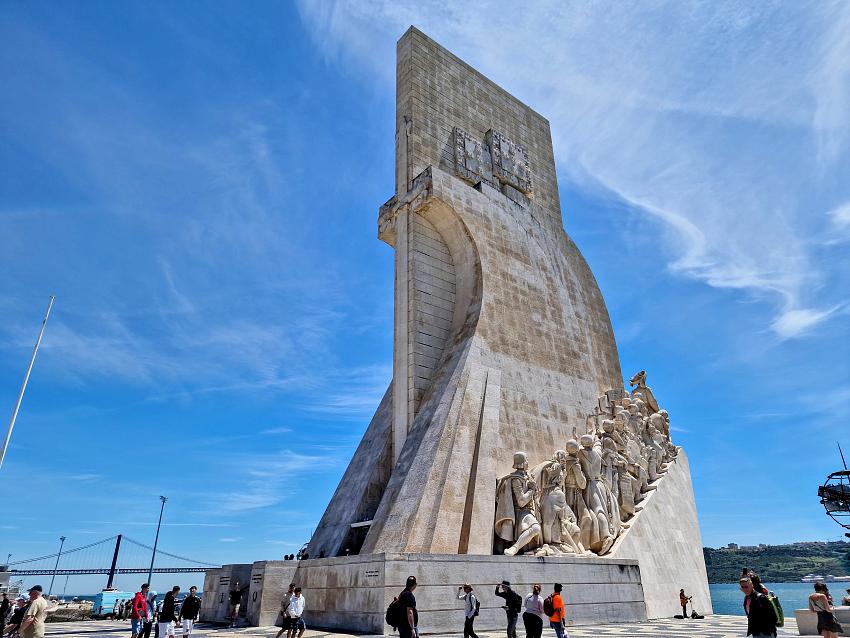
Padrão dos Descobrimentos, or the Monument to the Discoveries, is a monumental structure in the Belém district of Lisbon that honors the famous Portuguese navigators and explorers of the 15th and 16th centuries. The monument, built in the shape of a ship’s prow, depicts key figures from the "Golden Age" of discoveries, including Prince Henry the Navigator, who stands at the front of the sculptures. Visitors can take an elevator to the top of the monument, where they are treated to a stunning view of the Tagus River, the 25th of April Bridge, and the nearby Torre de Belém. Padrão dos Descobrimentos is not only a symbol of Portuguese history but also one of the most popular places to explore Lisbon’s heritage.
Arco do Triunfo (Triumphal Arch)
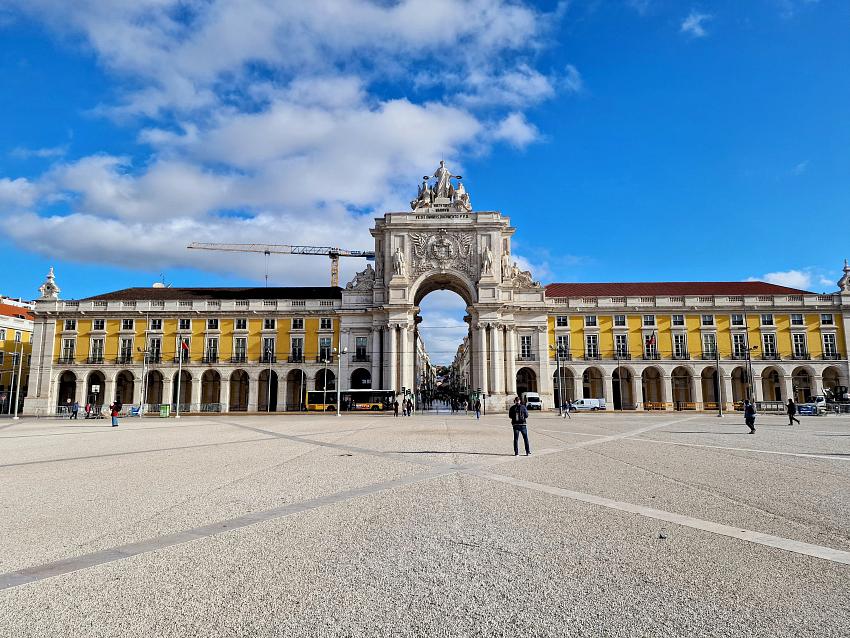
Arco do Triunfo, officially known as Arco da Rua Augusta, is an iconic triumphal arch in the center of Lisbon at Praça do Comércio square. This beautifully decorated arch was built to commemorate the city's reconstruction after the devastating 1755 earthquake and symbolizes the strength and resilience of Lisbon. Arco do Triunfo is a popular tourist destination and a great place for photography, capturing not only the beauty of Lisbon's architecture but also the spirit of Portuguese history.
Miradouro da Graça (Graça Viewpoint)
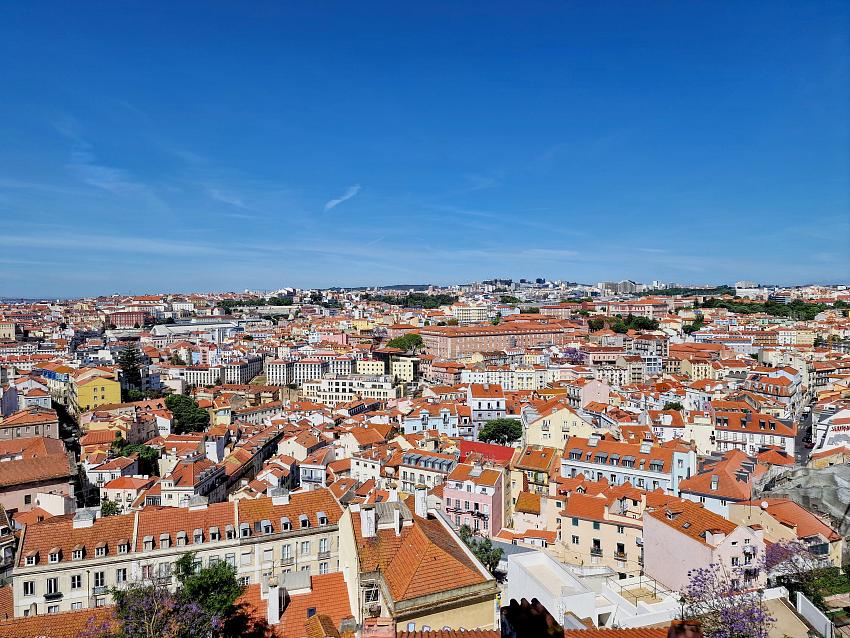
Miradouro da Graça is one of the best viewpoints in Lisbon, located in the historic Graça district. This vantage point offers a stunning panoramic view of the city, including the Castelo de São Jorge, the Tagus River, and the Alfama district. Miradouro da Graça is an ideal spot for watching the sunset and enjoying the peaceful atmosphere the location offers. In addition to the breathtaking view, you can admire the statue of Saint Graça and the surrounding beautiful greenery. It’s a popular spot not only for tourists but also for locals who come here to relax and enjoy the unique atmosphere of Lisbon.
Miradouro da Senhora do Monte (Viewpoint of Our Lady of the Mountain)
Miradouro da Senhora do Monte is one of the most beautiful viewpoints in Lisbon, offering a panoramic view of the entire city, including the Castelo de São Jorge, the Baixa district, the Tagus River, and the Ponte 25 de Abril bridge. This viewpoint is located in the quiet Graça neighborhood and, due to its higher position, provides unforgettable views, especially at sunset. Miradouro da Senhora do Monte is an ideal spot for those who want to escape the hustle and bustle of the city and enjoy the romantic atmosphere of Lisbon with a unique view.
Santa Justa Lift (Elevador de Santa Justa)
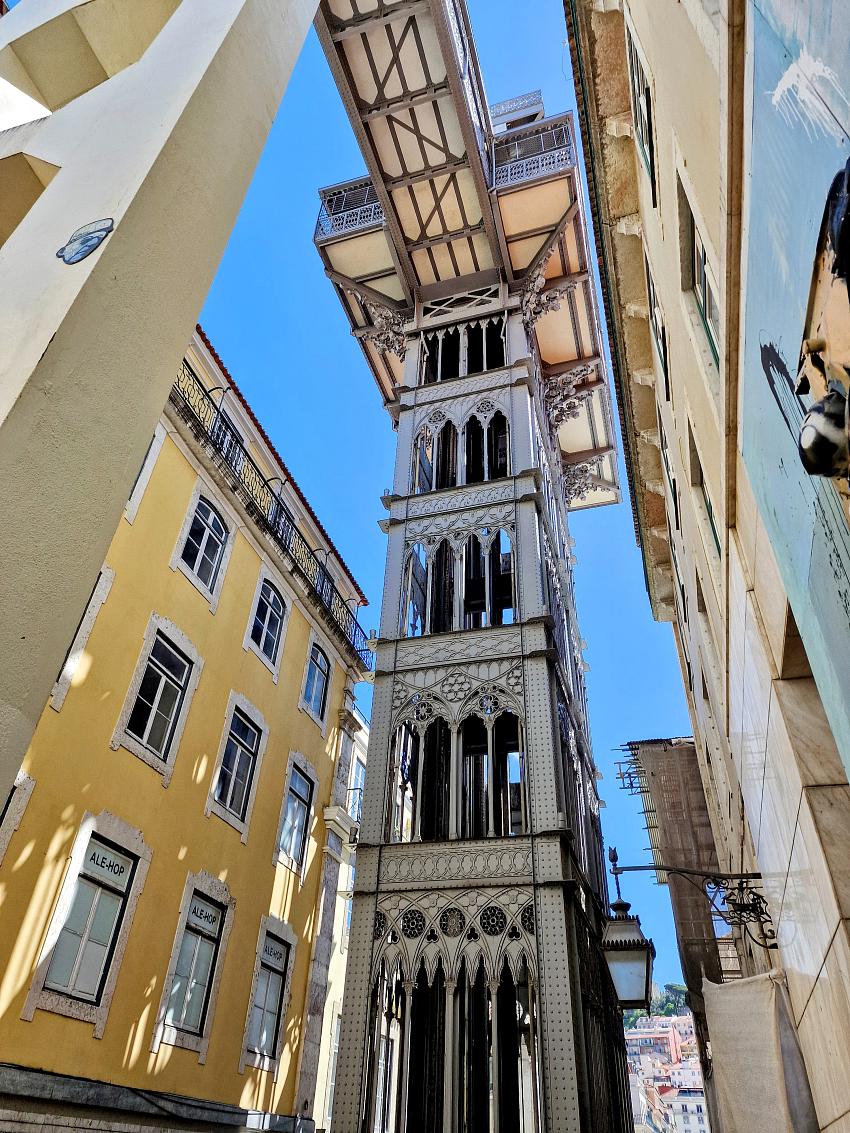
Santa Justa Lift (Elevador de Santa Justa) is one of the most famous and iconic landmarks in Lisbon. This historic lift, built at the turn of the 19th and 20th centuries, connects the Baixa district with a viewing platform in the Carmo area. Its neo-Gothic architecture with metal details and the view of the city skyline from its top is a fascinating experience. The Santa Justa Lift offers not only a practical connection between two levels of the city but also a unique perspective of Lisbon’s historic center, including Castelo de São Jorge, Alfama, and the Tagus River. It’s a great spot for photography and a quick escape from the urban hustle with breathtaking views.
You can also reach the viewpoint above the lift without the long wait for the elevator. Simply walk around the street and climb the stairs. You can access the path up through the passage from Rua do Carmo, Travessa Dom Pedro de Menezes, or Rua Garrett.
Ponte 25 de Abril (25th of April Bridge)
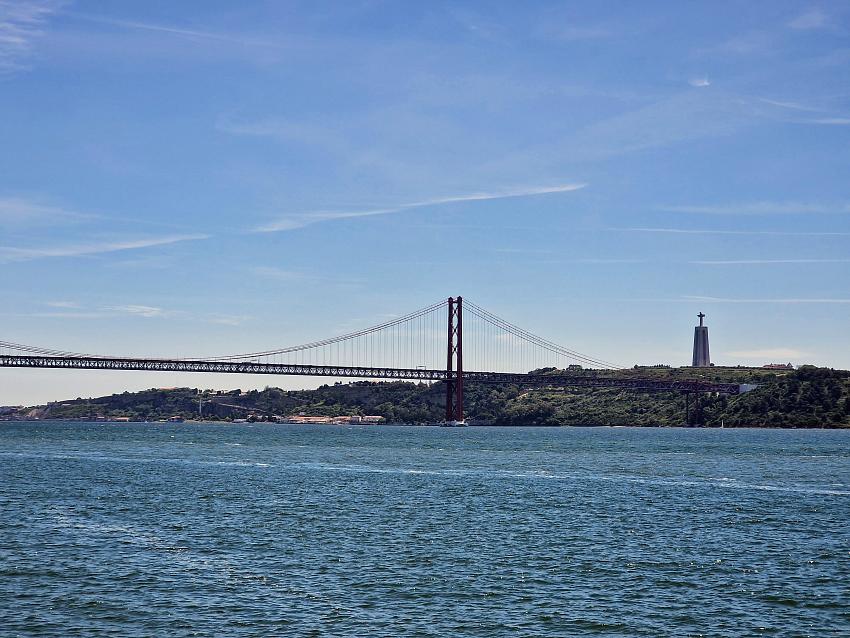
Ponte 25 de Abril is an iconic bridge in Lisbon that connects the capital with the city of Almada on the other side of the Tagus River. This impressive suspension bridge, opened in 1966, is often compared to the Golden Gate Bridge in San Francisco due to its similar red color and architectural design. Ponte 25 de Abril is not only an important transportation route but also a symbolic link between the two parts of the city, making it a significant element of the Lisbon skyline. The bridge is known for its historical significance, as its name refers to April 25, 1974, the day of the Portuguese Revolution and the overthrow of the dictatorship. Ponte 25 de Abril is an ideal spot for admiring views of the city, the river, and the surrounding landscape.
Almada
Almada is a city located on the opposite side of the Tagus River, directly across from Lisbon, and offers stunning views of the Portuguese capital and the Ponte 25 de Abril bridge. Almada is known for its historic atmosphere, beautiful beaches, and cultural landmarks, such as the impressive Christ the King statue (Cristo Rei), which towers over the city and resembles the similar statue in Rio de Janeiro. The city is an ideal destination for a day trip from Lisbon, where you can enjoy a quieter environment, picturesque streets, local restaurants, and excellent opportunities for hiking and cycling along the coastline. Almada is also easily accessible by ferry, making it a great choice for discovering a different perspective of Lisbon.
Castle of Almada
Castelo de Almada (Almada Castle) is a historic fortress located on a hill in the city of Almada, offering beautiful views of the Tagus River and Lisbon. This castle dates back to the medieval period and was originally built as a defensive fortress to protect the strategic access to the city. Although only ruins remain today, the castle offers visitors a fascinating glimpse into the region's history. The surrounding area is an ideal spot for walks and enjoying panoramic views, and due to its location, the castle is a popular destination for tourists looking to experience a quieter part of the Lisbon metropolitan area.
Cruz Alta
Cruz Alta is a viewpoint and monument located in the Almada area, offering some of the best views of Lisbon and the Tagus River. This pilgrimage site is known for its impressive cross statue, which rises above the landscape and symbolizes the spiritual and historical significance of the location. Cruz Alta is a popular spot for both tourists and locals, who come here not only for the panoramic views but also for the peaceful atmosphere, ideal for relaxation and photography. This viewpoint is located near the famous Christ the King statue (Cristo Rei), making the entire area a popular destination for trips and spiritual reflection.
Monsanto
Monsanto is a natural park and neighborhood in Lisbon, located on hills with views of the city and the Tagus River. This green oasis is known for its fascinating combination of nature and urban landscape, where old village houses blend with modern buildings. Monsanto is an ideal place for hiking, cycling, and outdoor activities due to its vast forests, rocky outcrops, and numerous trails. The park also features several viewpoints from which you can admire the panoramas of Lisbon, including the Padrão dos Descobrimentos tower and the Castelo de São Jorge walls. Monsanto is the perfect destination for those looking for an escape into nature without leaving the city.
Ribeira das Naus
Ribeira das Naus is an area in Lisbon located along the Tagus River, near the historic city center. Originally serving as a shipyard where Portuguese merchant and military ships were built and repaired, today it is a popular spot for walks and relaxation, offering stunning views of the river and the Ponte 25 de Abril bridge. The area is filled with tourists, and on the beach, local artists create various sand paintings and "sculptures."
Bairro alto
Bairro Alto is one of the liveliest and most characteristic neighborhoods in Lisbon, known for its bohemian atmosphere, narrow streets, and historic buildings. Located on a hill, it is popular among both locals and tourists due to its wide range of bars, cafes, restaurants, and live music. Bairro Alto is the heart of fado, traditional Portuguese music, and its nightlife is legendary. In addition to entertainment, this neighborhood also offers beautiful views of the city, such as from the Miradouro de São Pedro de Alcântara viewpoint. Bairro Alto is a place where history, culture, and modern urban life blend, making it a great spot to explore Lisbon both day and night.
Mosteiro dos Jeronimos
The Mosteiro dos Jerónimos (Jerónimos Monastery) is one of the most significant historical and architectural landmarks in Lisbon. Built in the Manueline style, it was listed as a UNESCO World Heritage site and is a symbol of Portugal’s maritime glory during the Age of Discoveries. The monastery is located in the Belém district of Lisbon and is known for its stunning façade, intricate details, and majestic arches. The monastery was originally built as a thanksgiving for the successful maritime voyages of Vasco da Gama and his crew. Today, it is the resting place of the notable Portuguese King Manuel I and the writer Luís de Camões. Visitors to the monastery can admire not only its architecture but also the rich history connected to the Portuguese empire.
Alfama
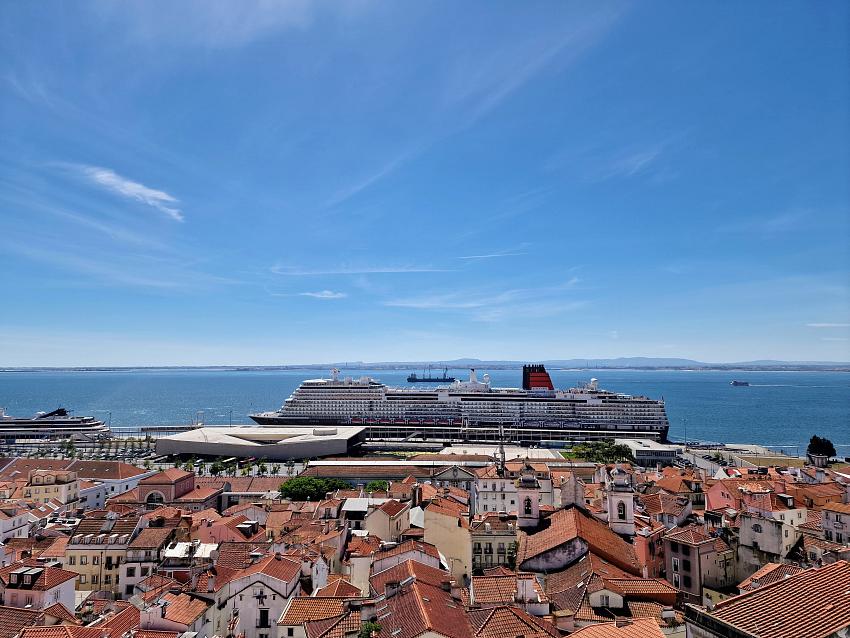
Alfama is one of the oldest and most authentic neighborhoods in Lisbon, known for its narrow, winding streets, historic houses, and traditional atmosphere. Situated on the slopes of a hill above the Tejo River, it is filled with small squares, typical Lisbon azulejos (decorative ceramic tiles), and cozy taverns where traditional Fado music is often played. Alfama was one of the few districts that survived the devastating 1755 earthquake, and its maze-like streets are full of historic landmarks, such as the Sé Cathedral and the Castelo de São Jorge, which offers stunning views of the city. Alfama is the perfect place for a walking tour where you can discover the charm of old Lisbon and experience the authentic atmosphere of urban life.
The dark sides of Lisbon
As I mentioned at the beginning of the article, Lisbon wasn't exactly the best experience for me.
If you are planning to visit Lisbon, prepare for a few inconveniences.
The information below is from May 2024 (it is possible that the situation has changed since then).
You are offered drugs almost everywhere here – in one day, I was offered them several times. When I was looking for something on the map at the corner of an intersection, a guy "selling glasses" subtly approached me. As soon as I got rid of him, I ran into another one at Praça do Comércio, and then at Torre de Belém, where, while buying a drink in a pineapple, another "vendor" approached me with an offer to "spice up" my drink. Like... if I bought something from each of them, I would shine like a Christmas tree.
Another thing that bothered me in Lisbon was the large number of migrants. The Igreja dos Anjos church, located next to the immigration office, was literally surrounded by a tent city, as were the nearby sidewalks of some streets. During the two mornings I experienced here, there was always a long line of migrants along the entire street. Maybe it's just my impression, but the evening movement in this area didn’t seem safe to me, which was confirmed by the hotel security. They told me that these groups of people near the church sometimes harass visitors in the evening when they return to the hotel, looking for keys and trying to get inside.
So, if you plan to visit Lisbon, be careful where you move around (it is recommended to stay where there are more people and avoid turning into secluded streets), where you stay, and who approaches you. I would also recommend making sure (which I didn’t think of at the time) that your accommodation is not near the immigration center.


