 Travellingvisio.com
Best things to do in Verona
 Italy
Italy
- Castelvecchio - The historical fortress of Verona
- Ponte Scaligero - The Gothic Bridge of Verona
- Arena di Verona - An ancient amphitheater with a living tradition
- Casa di Giulietta - Juliet's house from the Shakespeare novel
- Piazza delle Erbe - The heart of the historic center of Verona
- Torre dei Lamberti - An icon of the Verona skyline
- Piazza dei Signori - Elegance and history in the heart of Verona
- Statue of Dante Alighieri: Tribute to the Italian poet
- Loggia del Consiglio - The Renaissance pearl of Verona
- Arche Scaligere (Scaligeri Tombs) - Funeral monuments of the Scaliger family
- Torre del Gardello: The historic tower of Verona
- Torricella Massimiliana - Historic tower with a panoramic view
- Piazza Bra - An impressive square in the heart of Verona
- Duomo di Santa Maria Matricolare - Verona Cathedral full of history and art
- Portoni della Brà: The majestic entrance to Piazza Bra
- Porta Borsari: Entrance to the historic city
- Sant'Anastasia - The Gothic jewel of Verona
- Giardino Giusti - Renaissance garden full of peace and beauty
- Teatro Romano - Ancient theater in the heart of Verona
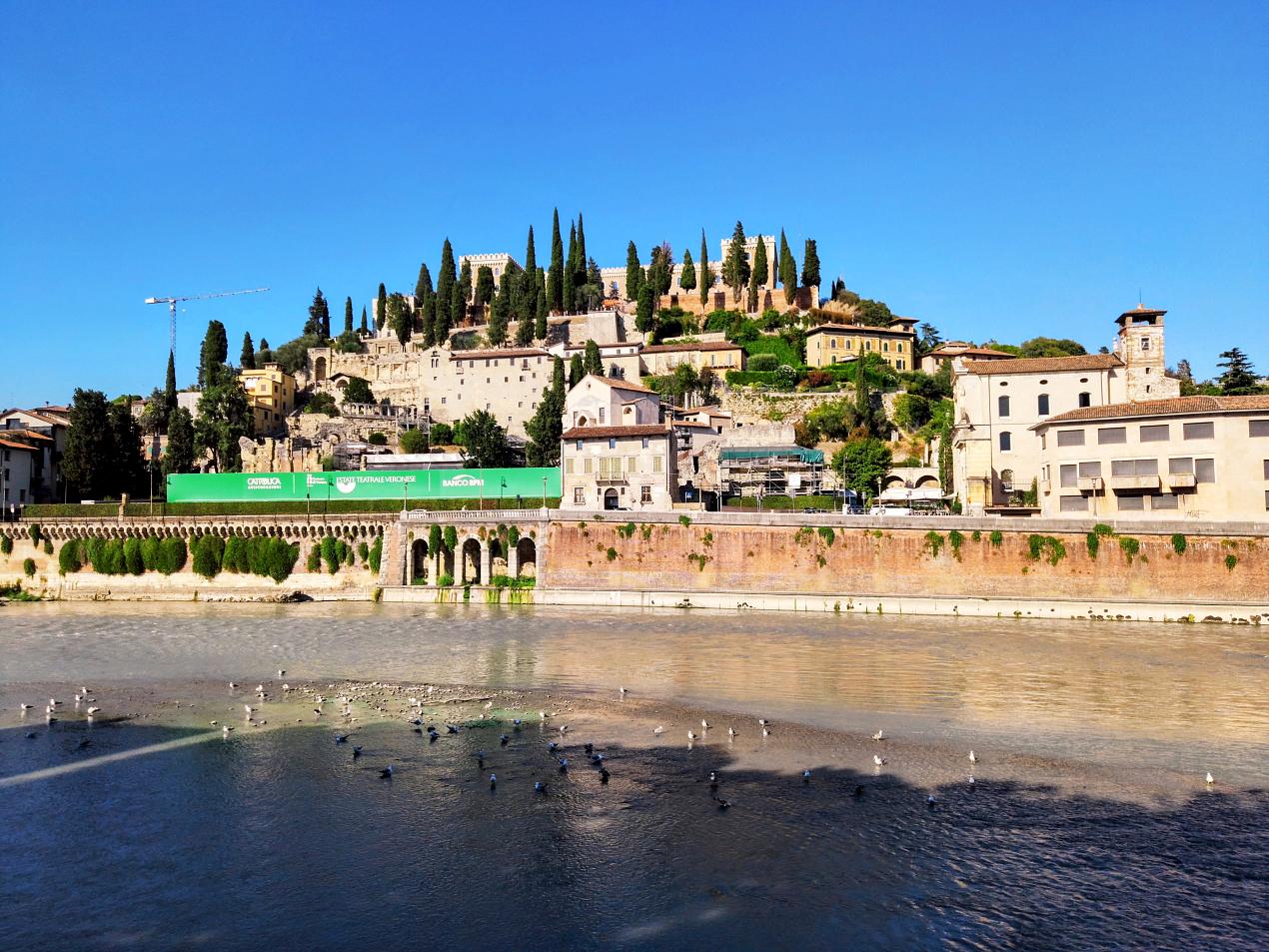
- Castel San Pietro: Historic fortress with a panoramic view
- Ponte Pietra - Historic bridge over the river Adige
- San Fermo Maggiore - Church treasure of Verona
- Basilica of San Zeno Maggiore - A gem of Veronese Romanesque architecture
What to visit in Verona? Discover Verona - a city of romance and history! Visit the famous Juliet's balcony, the Roman amphitheater, and the charming historic center. Tips on the most beautiful places not to miss in Verona.
 New: Follow me on WhatsApp channel 🤟
If you love history and the atmosphere of picturesque towns full of historical monuments, then Verona is the place for you.
This city, famous for its rich history and unforgettable romantic stories like Romeo and Juliet, will enchant you with its unique atmosphere.
Verona offers beautiful monuments, picturesque squares, and narrow streets that will transport you back in time, while providing a peaceful and pleasant experience without the hectic hustle and bustle of large cities.
If you're traveling by car and looking for parking in Verona, I've written an article titled Where to Park in Verona.
Castelvecchio - The historical fortress of Verona
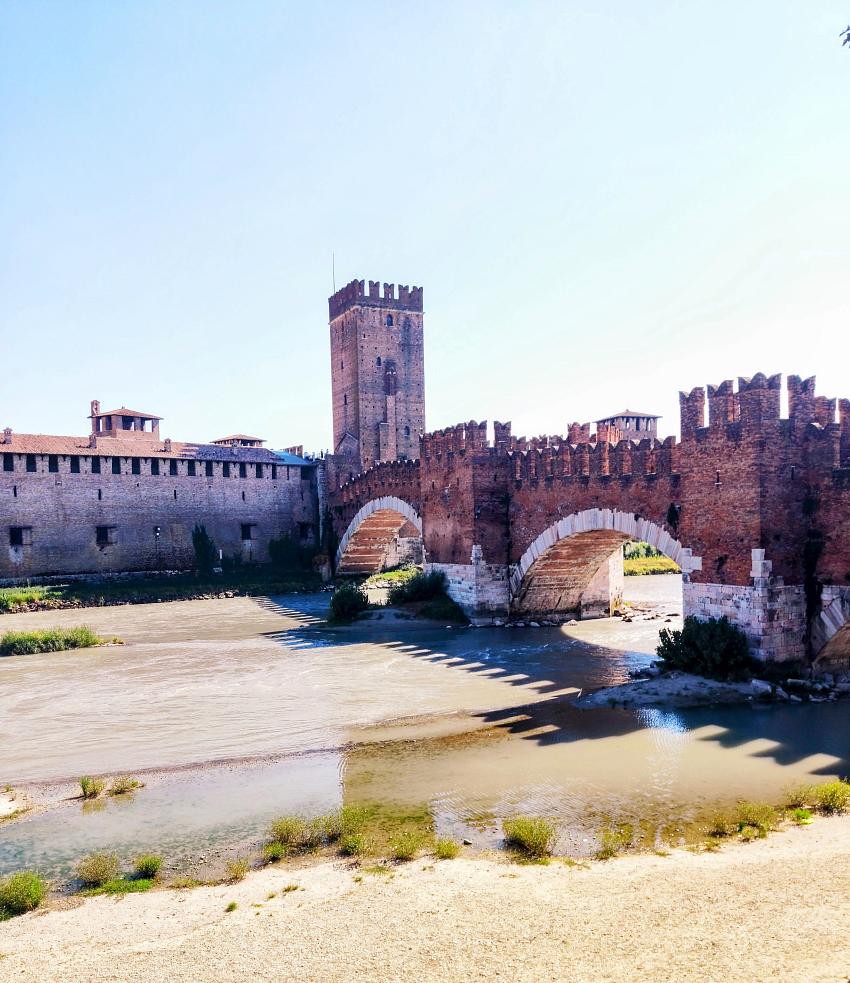
Castelvecchio, or "Old Castle", is one of Verona's most imposing monuments. This medieval castle was built in 1354 on the banks of the Adige River and served as a military fortress as well as a symbol of the power of the Scaliger family. Here you can see the Castelvecchio Museum, which exhibits unique collections of sculptures, paintings, weapons and ceramics from different periods. Don't forget to walk the iconic Ponte Scaligero bridge, which is connected to the castle - its Gothic architecture and magnificent views of the city will amaze you. Castelvecchio is not only a historical jewel, but also an ideal place for lovers of culture and architecture.
Ponte Scaligero - The Gothic Bridge of Verona
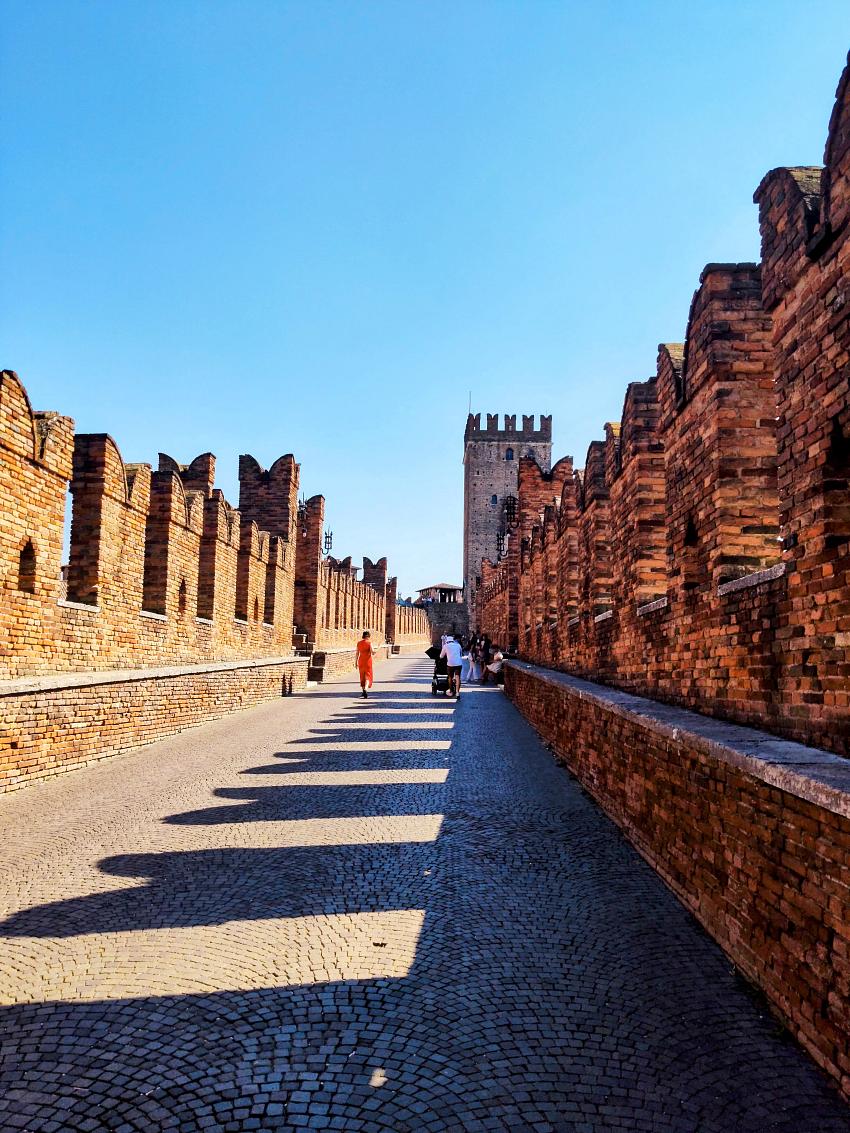
Ponte Scaligero, also known as Castelvecchio Bridge, is one of Verona's most photographed attractions. This Gothic bridge was built in the 14th century as part of Castelvecchio Castle and served as a strategic escape passage for the Scaliger family. The bridge, 120 meters long, stands out for its brick arches and massive battlements, which reflect the medieval construction style. As you walk across the bridge, you will enjoy a wonderful view of the Adige River and the historic center of Verona. After the Second World War, the bridge was precisely reconstructed and today it is a symbol of the city.
Arena di Verona - An ancient amphitheater with a living tradition
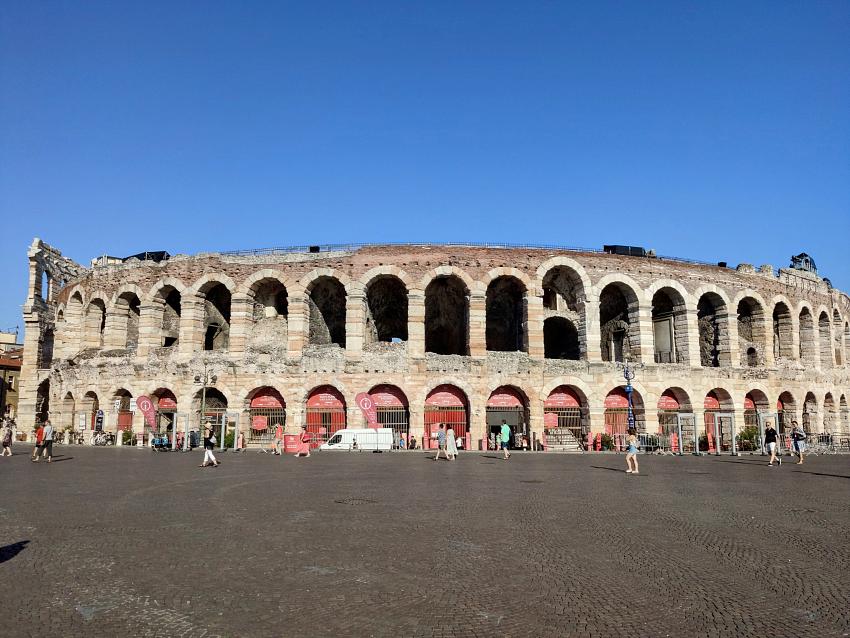
The Arena di Verona is one of the best-preserved ancient amphitheatres in the world and undoubtedly one of the city's biggest attractions. Built in the 1st century AD. l., was originally used to host gladiator matches and other public performances. Today, the Arena is known for its stunning opera and concert performances that take place during the summer festival. Its capacity to accommodate up to 15,000 spectators makes it the largest outdoor amphitheater in Italy. You can admire not only its architecture, but also immerse yourself in the fascinating atmosphere of a living culture. Arena di Verona is a must-see for lovers of history, opera and grandiose buildings.
Casa di Giulietta - Juliet's house from the Shakespeare novel
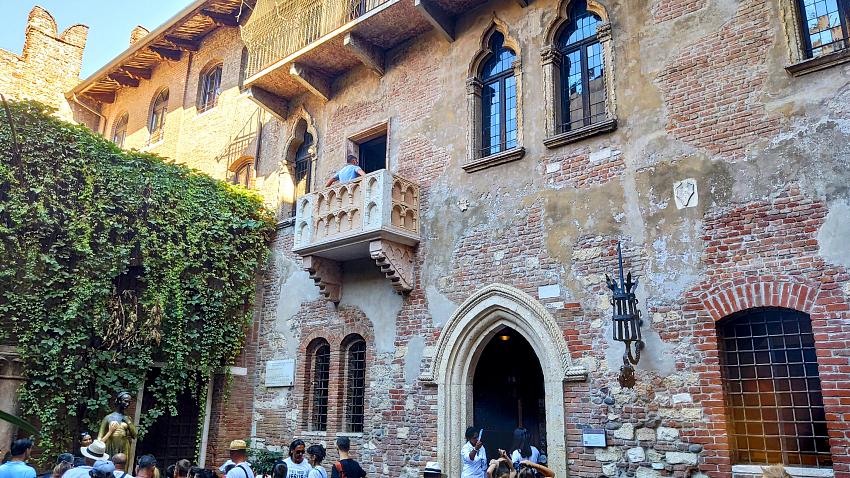
Casa di Giulietta, also known as Juliet's House, is one of the most romantic and visited attractions in Verona. Dating back to the 13th century, this historic house is associated with the legend of Romeo and Juliet, although it is uncertain whether the character who inspired Shakespeare's heroine actually lived here.
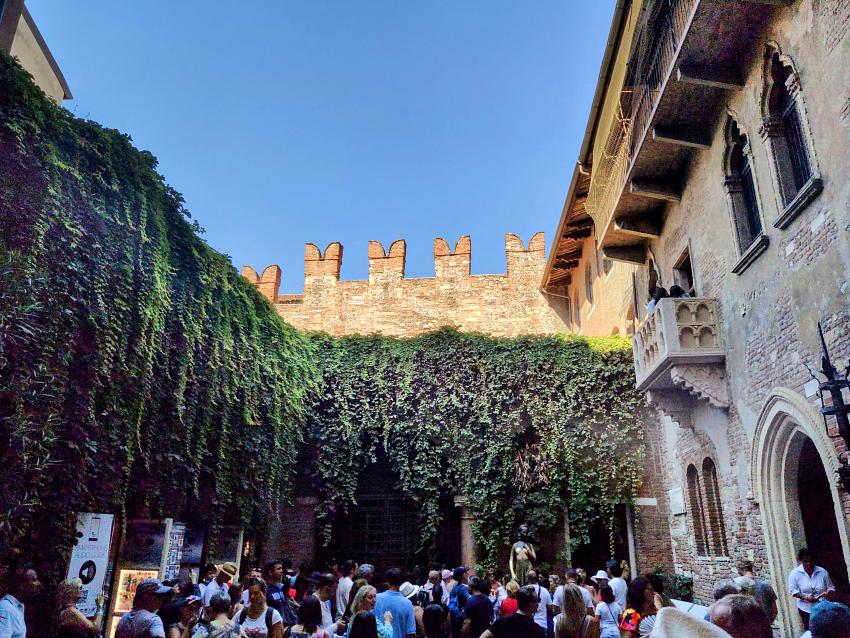
The biggest attraction is the famous balcony where, according to the story, Juliet confesses her love to Roma, which attracts thousands of tourists every year. In addition to the balcony, you can also explore the museum, which contains artifacts from the Renaissance period. Casa di Giulietta is the ideal place for lovers of romance and literature, who can enjoy the magical atmosphere of this legendary story.
Tourists are truly blessed here. I recommend visiting this place early to avoid crowds and long queues.
Piazza delle Erbe - The heart of the historic center of Verona
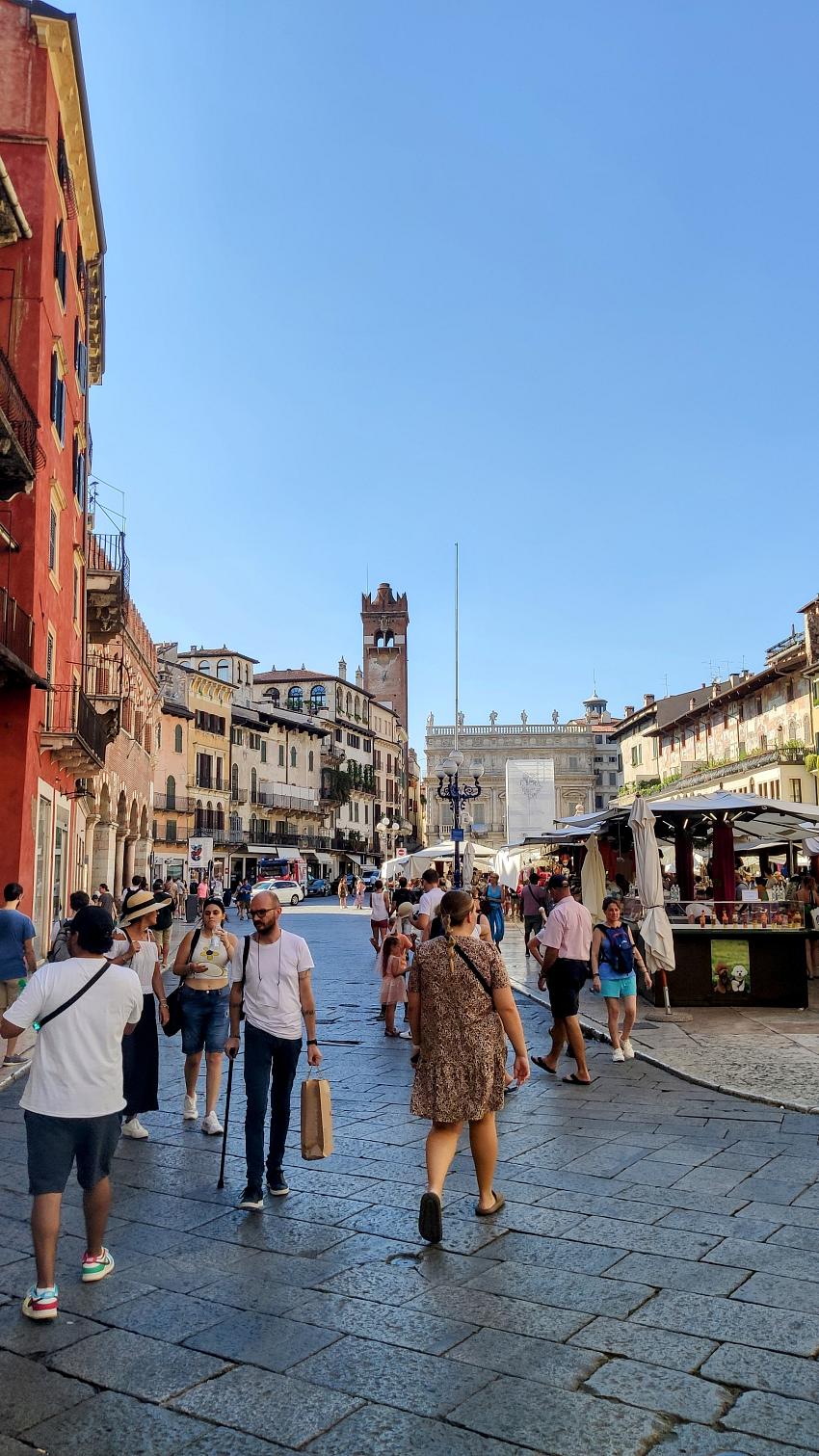
Piazza delle Erbe is a lively and picturesque square in the heart of Verona that will immediately absorb you with its atmosphere. It is surrounded by historic buildings, including the imposing Torre dei Lamberti, and served as the city's main market square in the past. Today, it is a place where history mixes with modern life, and tourists can not only admire the beautiful palaces and fountains, but also enjoy the local fruit, flower and souvenir markets. The square is also home to the famous "Domus Nova", a historic Renaissance building, and a great opportunity to taste traditional Verona coffee in one of the nearby cafes. Piazza delle Erbe is the ideal place to start a tour of the city, where Verona's history, culture and everyday life meet.
I recommend to plan a break at this place and have a good snack here. There are really many restaurants here and everyone has something to choose from!
Torre dei Lamberti - An icon of the Verona skyline
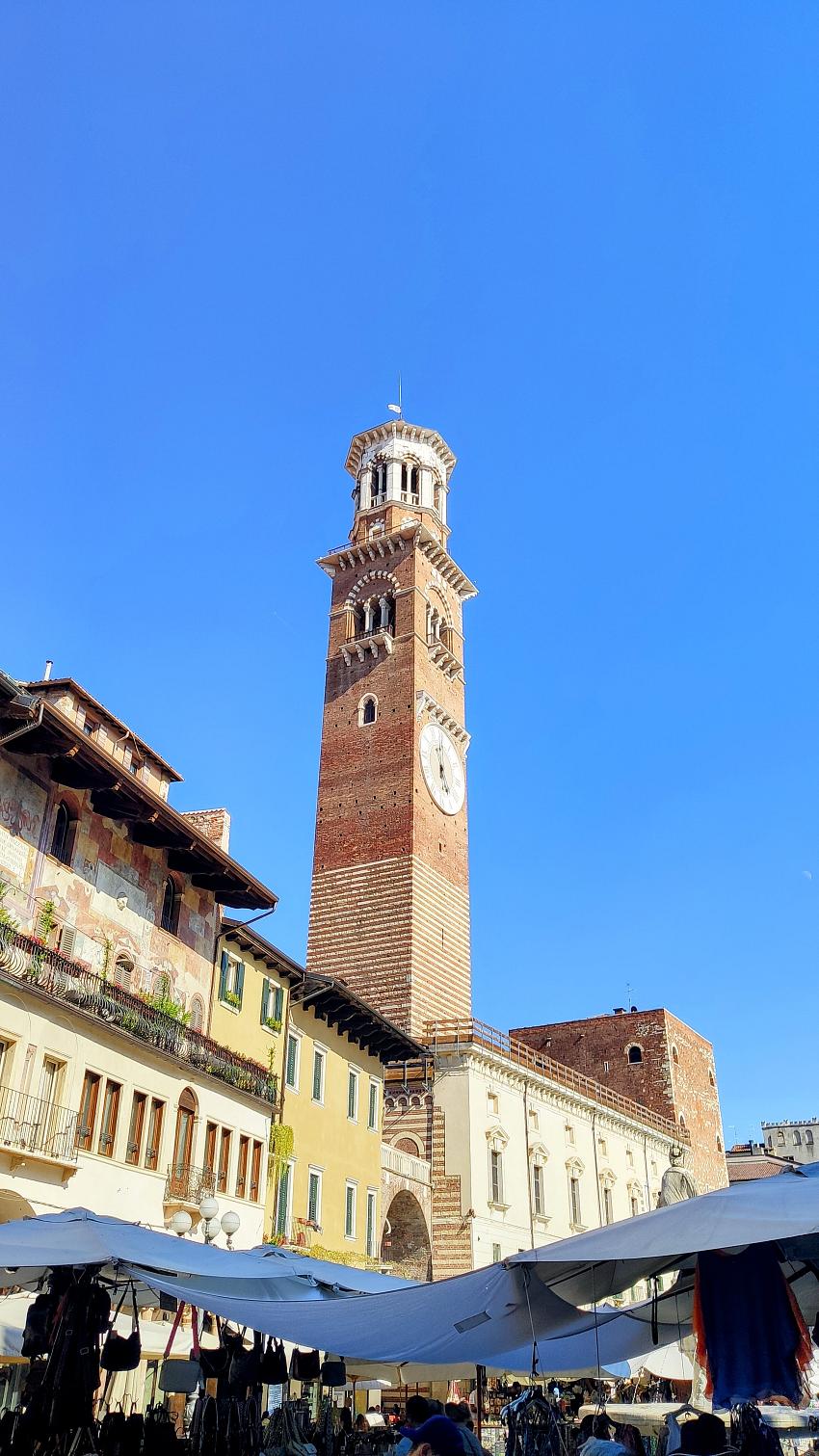
The Torre dei Lamberti is one of the most distinctive monuments of Verona and a dominant feature of its historic center. This tower, 84 meters high, was built in the 12th century and served as a belfry for the cathedral and the city's clock mechanism. Today, the Torre dei Lamberti is a popular spot for tourists who come here for a breathtaking view of the entire city and the surrounding countryside.
Piazza dei Signori - Elegance and history in the heart of Verona
Piazza dei Signori, also known as "Square of the Lords," is one of the most beautiful and grand squares in Verona. Surrounded by historic palaces and monuments, this square is rightly considered the center of Verona's aristocracy. The dominant feature of the square is the statue of Dante Alighieri, which refers to the great Italian poet who lived in Verona for several years. The square is lined with elegant Renaissance buildings, including the Palazza del Governo, and is linked to other important historical sites such as the Torre dei Lamberti. Piazza dei Signori is a quiet and impressive place that offers you not only breathtaking architecture, but also the opportunity to relax in one of the local cafes and enjoy the atmosphere of urban elegance.
Statue of Dante Alighieri: Tribute to the Italian poet
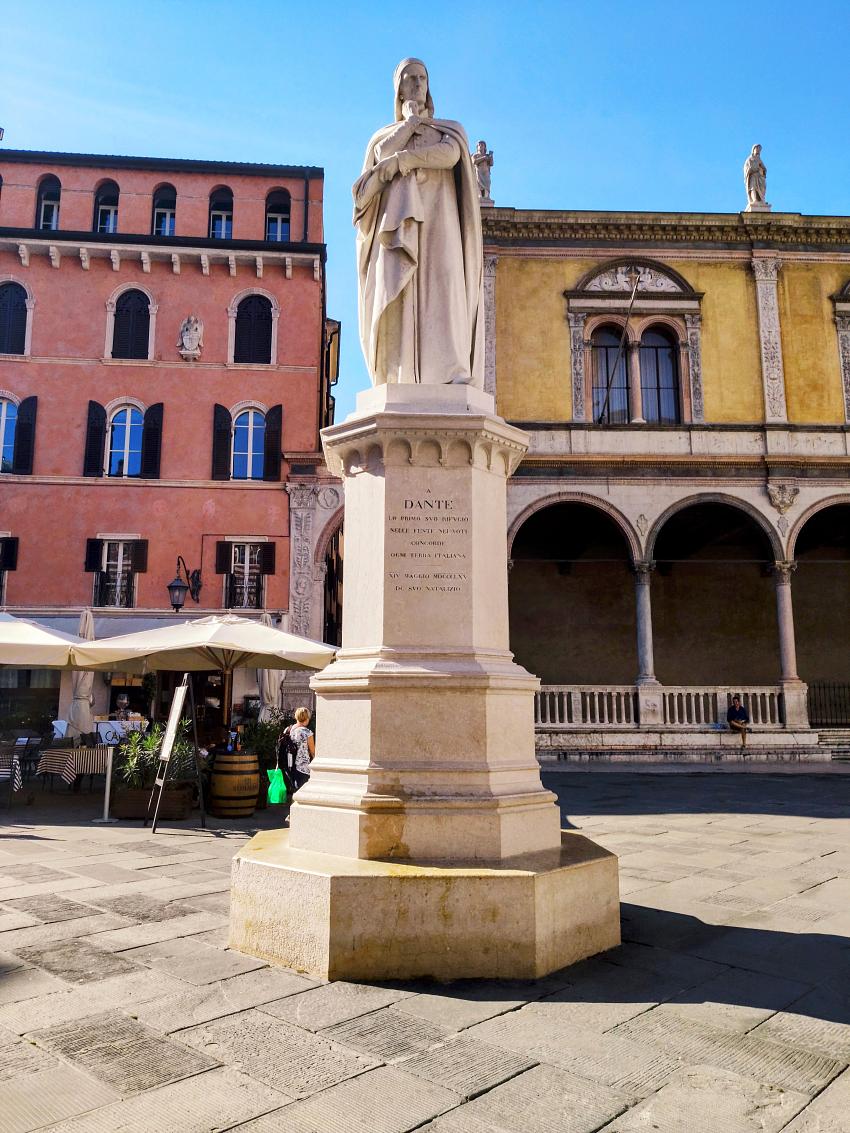
Located in Piazza dei Signori in the center of Verona, the statue of Dante Alighieri is a monumental tribute to one of the greatest Italian poets of all time. Dante, the author of the famous "Divine Comedy", was in exile in Verona, and this statue was built in his honor. Dante is depicted in deep thought, reflecting his philosophical and literary contributions. The statue was unveiled in the 19th century and is placed near other historic buildings, underscoring its cultural importance to the city. When you stop by the statue, you can admire not only its artistic value, but also remember Dante's influence on literature and Italian culture. The statue is a symbolic link between Verona and this giant of Italian literature.
Loggia del Consiglio - The Renaissance pearl of Verona
In the photo above on the right.
The Loggia del Consiglio is a magnificent Renaissance building located in Piazza dei Signori in the center of Verona. Built in the 15th century, it served as the seat of the city council and is an example of typical Renaissance architecture. Its elegant arcades, ornate columns and imposing frescoed facade reveal the artistic and political importance of this building in the historic center of Verona. The Loggia also includes the highly valued statue of Saint Mark, which commemorates Verona's connection with the Republic of Venice. Today, the Loggia del Consiglio is not only an architectural gem, but also a venue for various cultural and public events. It is an ideal place for lovers of history, art and Renaissance architecture.
Arche Scaligere (Scaligeri Tombs) - Funeral monuments of the Scaliger family
The Arche Scaligere, or Scaligeri Tombs, are a fascinating set of Gothic tombs located near the Church of Santa Maria Antica in the historic center of Verona. These monumental tombs are dedicated to members of the famous Scaliger family who ruled Verona in the 13th and 14th centuries. The most famous of these is the tomb of Cangranda della Scala, highly decorated and carved from marble, which features Gothic features such as vaults and statues. Each grave is artistically elaborate and depicts not only the spiritual but also the worldly power of the family. The Arche Scaligere are not only a historical treasure, but also an excellent example of medieval art and funerary architecture. This complex is an ideal place for those who want to better understand the powerful history of Verona and its artistic boom.
Torre del Gardello: The historic tower of Verona
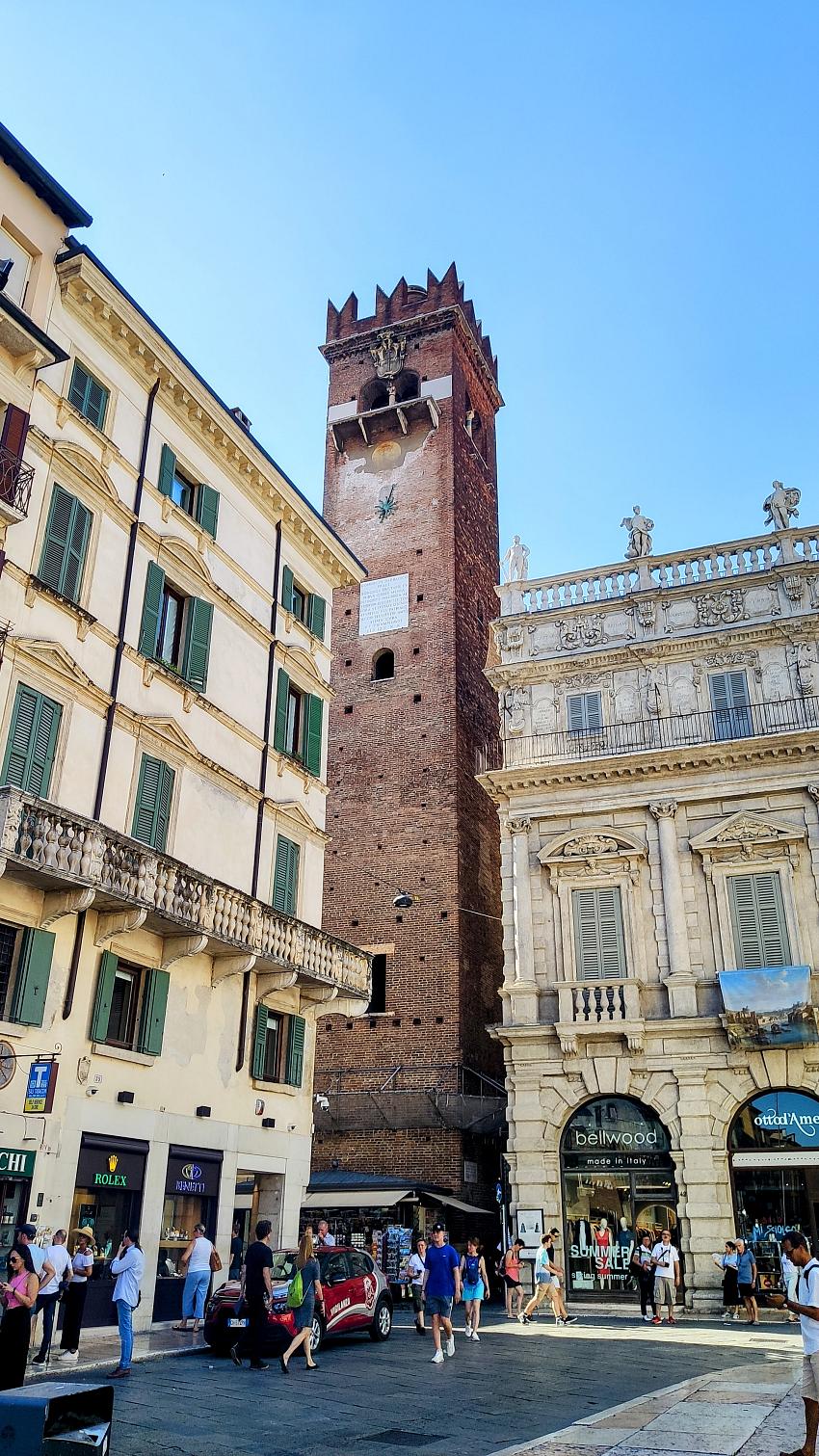
Torre del Gardello is a medieval tower located in the historic center of Verona, near Piazza delle Erbe. Built in the 14th century as part of the city's defenses, this elegant tower belonged to the Gardello family, after which it takes its name. The tower, approximately 50 meters high, was used in the past not only as an observatory, but also as a bell tower. Today it is known for its beautiful facade and impressive Gothic architecture. Torre del Gardello is less well known than some of the other towers in Verona, but it is a great example of a medieval structure that contributes to the historic character of the city. The tower is an ideal place for history buffs who want to see Verona from a different angle.
Torricella Massimiliana - Historic tower with a panoramic view
Torricella Massimiliana is a picturesque historic tower located on top of a hill in the northern part of Verona. It was originally built as part of the defensive structures of the city walls and served to protect Verona. Today, Torricella Massimiliana is famous for its panoramic viewpoint, which offers breathtaking views of the entire city and the surrounding countryside.
Piazza Bra - An impressive square in the heart of Verona
Piazza Bra is one of the largest and liveliest squares in Verona, known for its size and historical importance. It is located close to the Arena di Verona, making it an ideal starting point for exploring the city's sights. The square is surrounded by elegant buildings, cafes and restaurants that attract tourists and locals alike. The dominant feature of Piazza Bra is of course the Arena di Verona, which rises in its center and attracts attention with its majestic appearance. In addition, the square is also home to the impressive city hall and several historic palaces. Piazza Bra is the lively center of city life, hosting various cultural and public events, and is a great place to relax, shop or enjoy an Italian espresso.
Duomo di Santa Maria Matricolare - Verona Cathedral full of history and art
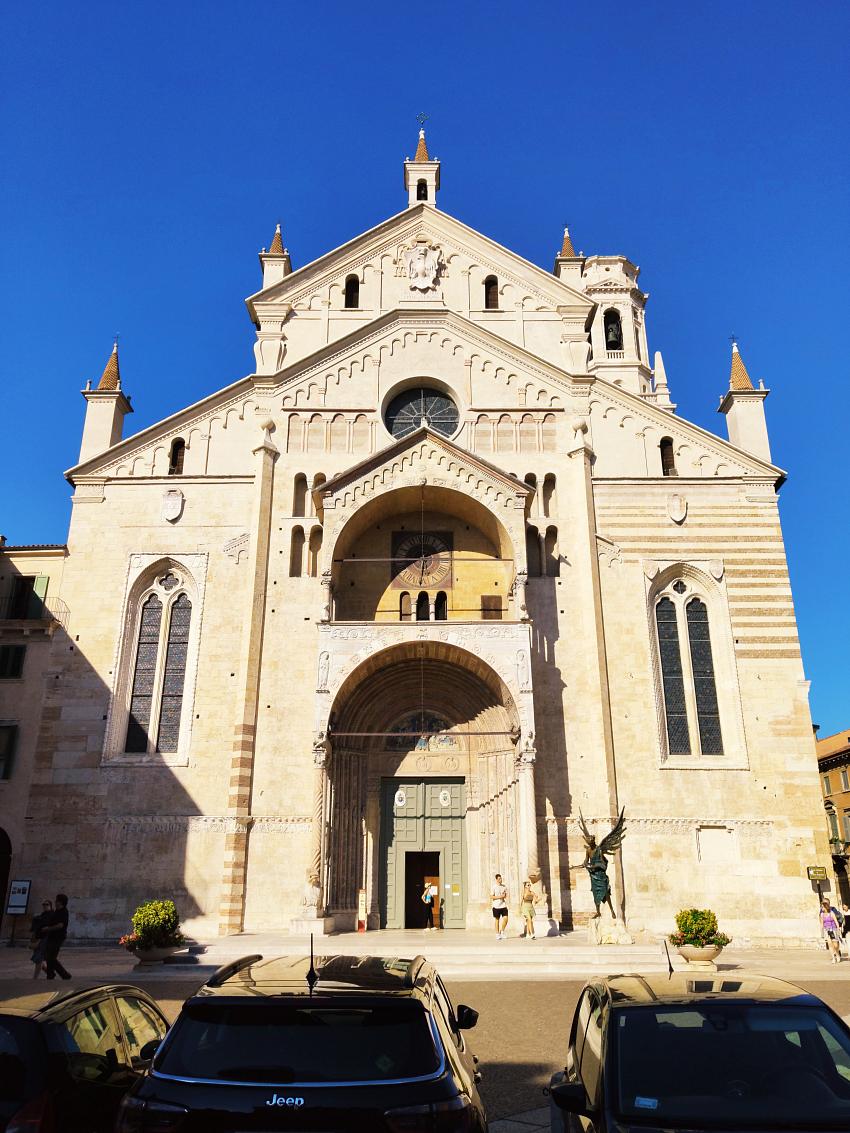
The Duomo di Santa Maria Matricolare, also known as the Cathedral of Verona, is one of the city's most important ecclesiastical monuments. Built in the 12th century, this impressive Romanesque church is dedicated to the Virgin Mary and is a symbol of Verona's spiritual and cultural power. The cathedral is known for its magnificent facade, which combines Romanesque and Gothic elements, as well as its rich interior full of works of art, including a fresco by the Renaissance painter Nicolò di Marco. Highlights include the nave, marble altar and medieval mosaics. The Duomo di Santa Maria Matricolare is not only a place of prayer, but also a treasure trove of Veronese art and architecture, ideal for lovers of history, religious art and Gothic architecture.
Portoni della Brà: The majestic entrance to Piazza Bra
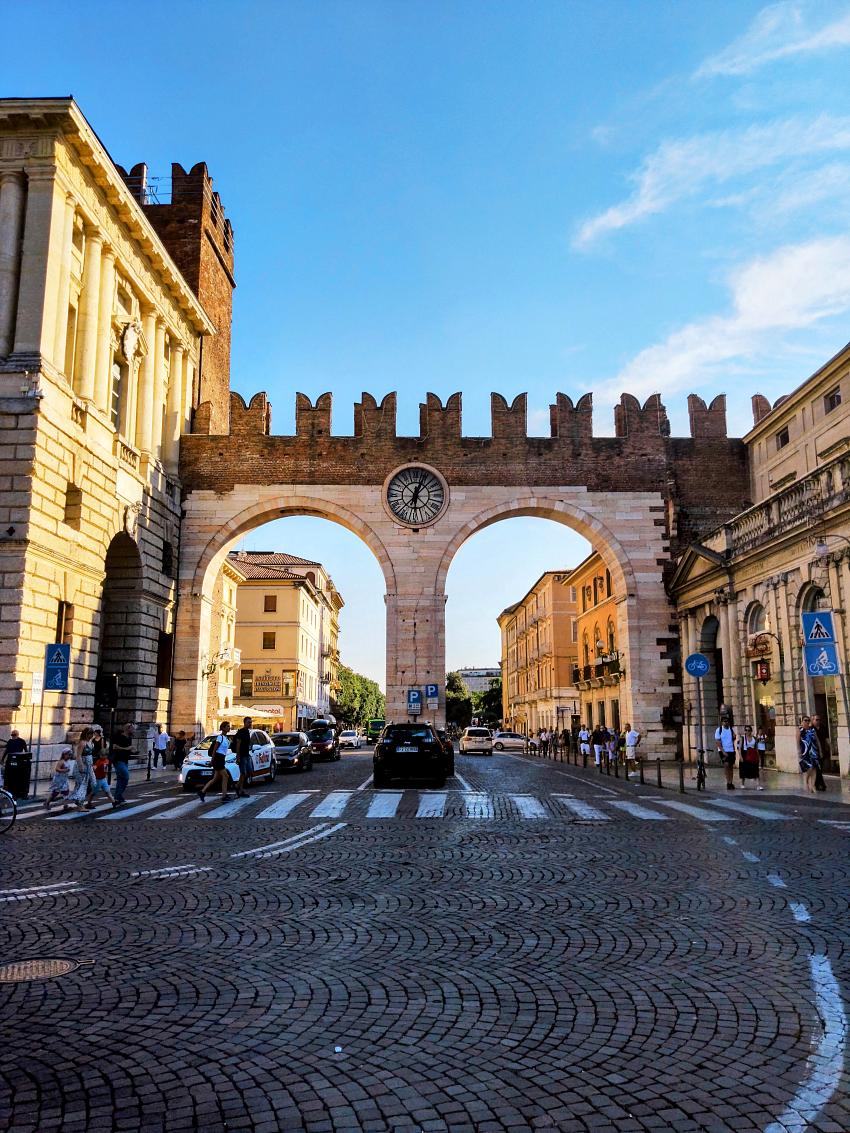
The Portoni della Brà are the imposing city gates that form the main entrance to one of Verona's most famous squares, Piazza Bra. Built in the 18th century, these gates were designed in the classicist style and today are an important historical monument. They originally served as an entry point to the city walls, but today they are a symbol of the connection between the historic center of Verona and the modern city. The Portoni della Brà are located close to the Arena di Verona, making them a popular point for tourists who take a walk around the historical monuments. Thanks to their impressive appearance and strategic location, the gates are not only an architectural gem, but also an entrance to a city full of history and culture.
Porta Borsari: Entrance to the historic city
Porta Borsari is one of the historic gates that once protected the city. Built in the 1st century, this monumental Roman gate was originally part of Verona's defense system and served as the main entrance to the city walls. The gate is beautifully decorated, with elegant columns and rich architectural details that reflect the opulence of the Roman period. Today, Porta Borsari is one of Verona's most important historical monuments, connecting the ancient with the modern parts of the city. This gate is an ideal place for history buffs who want to walk in the footsteps of Roman architecture and experience the atmosphere of ancient Verona.
Sant'Anastasia - The Gothic jewel of Verona
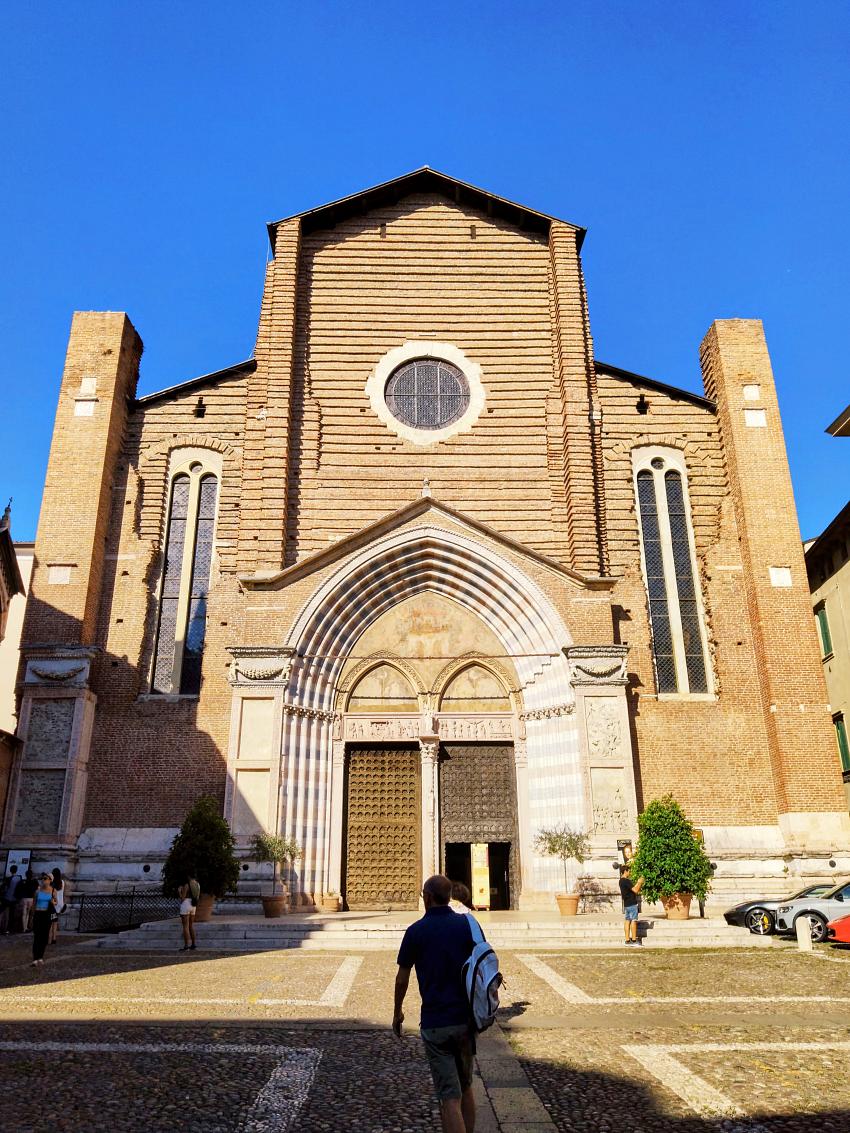
The Church of Sant'Anastasia is one of the most important Gothic churches in Verona and a real artistic gem of the city. Built in the 13th century, this impressive church is dedicated to St. Anastasia and captivates visitors with its magnificent architecture and beautiful details. The interior of the church is rich in artistic elements, including exceptional fresco cycles and sculptural works. The greatest treasures are the frescoes by the famous painter Pisanello, which decorate the vaults and walls of the church.
Giardino Giusti - Renaissance garden full of peace and beauty
Giardino Giusti is one of the most beautiful and best preserved Renaissance gardens in Italy, located in the heart of Verona. Created in the 16th century for the Giusti family, this historic park is a wonderful example of Italian garden art with carefully arranged avenues, fountains and sculptures. The garden is divided into several terraces, each of which offers a different view of the city and the surrounding countryside. From the top of the garden there is a breathtaking view of Verona, ideal for photographers and nature lovers. Giardino Giusti is also famous for its labyrinths and carefully maintained plants that give the space a magical atmosphere.
Teatro Romano - Ancient theater in the heart of Verona
The Teatro Romano is a fascinating Roman amphitheater located on the slopes of a hill near the Adige River. This ancient theater complex, built in the 1st century BC. n. l., was once a place for organizing theatrical performances and public ceremonies. Today you can explore its well-preserved ruins, which include a theater stage, an auditorium with a capacity of up to 20,000 spectators, and several parts of the original structure. In addition to the archaeological finds, the Teatro Romano is now a venue for summer cultural events such as concerts and theater performances.
Castel San Pietro: Historic fortress with a panoramic view
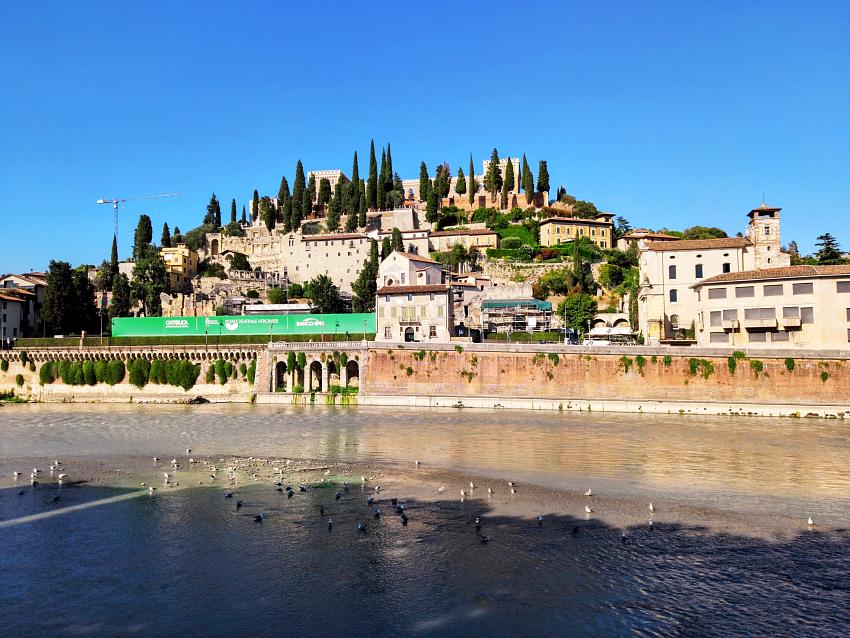
Castel San Pietro is an impressive castle that stands on a hill above the Adige River, offering some of the best views of Verona. Originally built in the 14th century, it served as a military fortress and guard point of the city borders. Today, Castel San Pietro is a popular place for tourists who come here not only for its historical importance, but mainly for the panoramic views of the entire city, its river and the surrounding countryside. You can reach the castle either by steep stairs or by a modern elevator that takes you to the top. The surroundings of the castle are ideal for walking and enjoying the peaceful atmosphere with wonderful views.
Ponte Pietra - Historic bridge over the river Adige
Ponte Pietra is one of the oldest and most beautiful bridges in Verona, connecting the two parts of the city across the Adige River. This stone bridge, originally built in the Roman period around 100 BC. n. l., is not only an architectural gem, but also a witness to the city's long history. Damaged during the Second World War, it has been carefully reconstructed and is today a symbol of Verona's resilience. The bridge consists of five arches and offers a wonderful view of the river and the surrounding urban landscape. Ponte Pietra is an ideal place for a walk, whether you want to enjoy the historical atmosphere or take amazing photos of the city skyline. This bridge is one of the main historical points that make Verona so special.
San Fermo Maggiore - Church treasure of Verona
San Fermo Maggiore is a fascinating church in the heart of Verona that combines two important architectural styles - Romanesque and Gothic. Originally founded in the 8th century, the church was gradually rebuilt and expanded, giving it its impressive appearance today. The interior is richly decorated with frescoes, sculptures and paintings, the most important work of art being the magnificent triptych of Saint Fero. The church is divided into two parts: the lower Romanesque chapel and the upper Gothic nave, which will captivate you with its height and light.
Basilica of San Zeno Maggiore - A gem of Veronese Romanesque architecture
The Basilica of San Zeno Maggiore is one of the most important ecclesiastical monuments in Verona and a gem of Romanesque architecture. Built in the 12th century, this impressive church is dedicated to Saint Zeno, the patron saint of the city. It is known for its beautiful facade with massive sculptures and a richly decorated portal. The interior of the basilica will enchant you not only with its peaceful atmosphere, but also with its beautiful frescoes and the altar triptych painted by Andrea Mantegna. The basilica is also the historical place where, according to tradition, the wedding of Romeo and Juliet took place.


